Where is Egypt Located in Africa?
It is a part of the African continent and stands at the northeastern tip of Africa, located between the Red Sea in the east and the Mediterranean Sea in the north. Its strategic location has made Egypt a crossroads of trade and culture since long. Egypt, serving as the bridge between Africa and the Middle East, thus represents the actor of regional and international affairs.Where is Egypt Geographically Located?
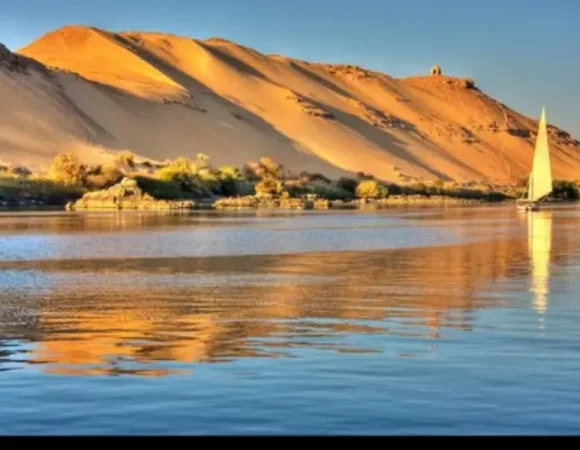
Occupying latitude 22 degrees to 32 degrees N and longitude 25 degrees to 35 degrees E, Egypt is geographically. The area south to the Sahara has life emanating from the Nile, which runs almost straight through the heart of Egypt, a river otherwise entire of fecundity. The weather is essentially desert hot in summer and mild in winter.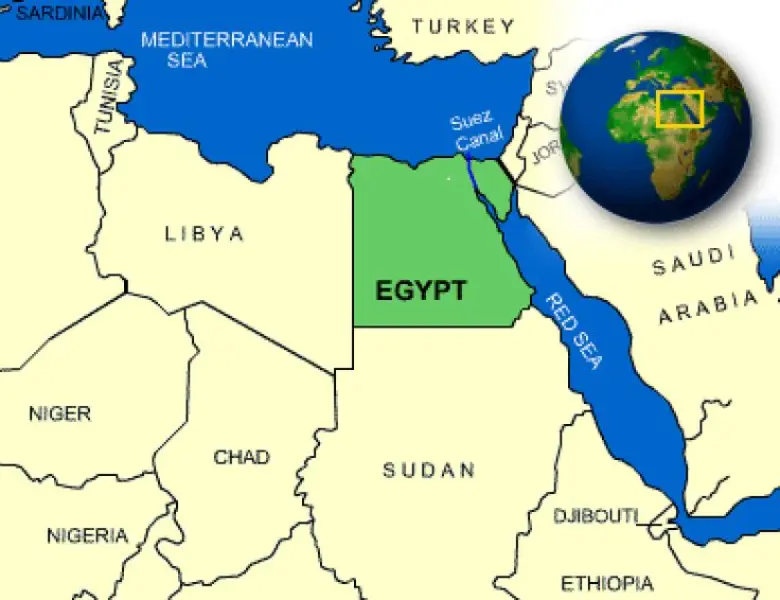
The Importance of Egypt's Location
It was geography that drafted the entire history and culture of Egypt alongside foreign relations. Egypt became since earliest times an international marketplace for trade, communications, and cross-cultural engagements due to its strategic geographical position between Africa, Asia, and Europe. Its most strikingly unique geographical factor is the Nile River that flows south to north, having at its north the Mediterranean Sea and at its east the Red Sea gently touching it, forming a very important bridge between the two continents.Historical Significance
This was evident in the world's oldest region along the banks of the river Nile. This fertile land nourished the people and provided raw materials for a primarily agriculture-based society. Everything-the Nile provided for the area has also encouraged coming as a means of natural communication and trade route. Commerce and Trade Egypt remains a great route for trade in the world. Its access to both European and the Red Sea has increased the commercial benefits during the construction of the Suez Canal in 1869. At this time, it depended on one of the busiest waterways in the world such that it generates necessary resources for the country itself. Cultural Exchange The geography of Egypt has made it a melting pot over time-from Greeks to Romans to Arabs to Turks to Europeans, melting into this high architecture built in a different language and by different types of customs, as the reality of diversified brush strokes in the culture of Egypt reflects itself. Geo-Political Importance This geographical location makes Egypt bridge essential to the international political landscape-the bridge between the Middle East and North Africa-in terms of regional diplomacy and security importance. The location is thus geographically crucial for the country, having devoted significantly to its historical identity, economic reality, and culture. Also Read about: egyptian traditions and celebrationsGeographic Regions of Egypt
If you visit Egypt you will see that Egypt's multifaceted terrains are conceptually divided into four areas, each with distinct special characteristics and significance. These four areas have been developed as a result of the Nile, deserts, and coasts that make up the rich natural-cultural heritage of Egypt. 1. The Nile Valley and Delta The Nile Valley and Delta are the most relatively fertile and populated sites in Egypt. The Nile River, the country's lifeblood, cuts through that very land, leaving it very narrow strips of arable land in the enormous desert. To the northern point where the Nile fans out into the Mediterranean Sea, the Delta becomes a green triangular area that primarily serves agriculture and takes care of the millions of people depending on it. This is the heart of the civilization of Egypt where the titan cities of Cairo and Alexandria are situated 2.Western Desert The western desert belongs to the Sahara desert. Two-thirds of the land area of Egypt falls in this region. It consists of giant fields of sand dunes, rocky plateaus, and palm-studded oases such as Siwa, Bahariya, and Farafra. The oases have served as important stopping grounds for trade caravans and are now being converted into tourist resorts. The western desert is largely uninhabited; however, typical of deserts, it abounds with resources like oil and gas. 3.Eastern Desert From the Nile Valley to the Red Sea lies the eastern desert. It is an area of rugged mountains with little vegetation and mineral wealth, including gold and precious stones. The other thing is that from the Red Sea coast, which is famous for coral reefs and marine life, mining and tourism are other big things contributing to the economy of the country with the Eastern Desert. 4.The Sinai Peninsula. When the triangular landmass in northeastern Egypt connects Africa and Asia, it breaches the borders of the Mediterranean Sea and the Red Sea north and south. Its two main zones cut across the peninsula: the southern arid zone, sited above Mount Sinai and Saint Catherine's Monastery; and the flat northern region, now a growing center of trade and development. Many factors contribute to Sinai's strategic importance, among which is the fact that it attracts multitudes of tourists for pilgrimage, beach resorts, and adventure. Also Read about: alexandria egypt historical sitesThe History of Egypt
One of the oldest civilizations, Egypt has assets dating back for some 5000 years. The land of the pharaohs contains monuments ranging from the pyramids to tombs and temples, the majority of which still exist today. The land is famed for having borne witness to the Greek, Roman, Arab, and Ottoman cultures, and each of these has added to the legacy of Egypt in various ages.Which Countries Share Borders with Egypt?
Egypt shares land borders with:- Libya to the west
- Sudan to the south
- Gaza Strip to the northeast
Egypt's Map
On the map of Egypt, one can see its characteristic shape, with the Nile crossing the country from south to north. The area lying towards the Delta in the north is fertile, while the south is desertific.
The Egyptian Flag
As the motto of Egypt is "The Land of the Nile", the rebirth and revival of Egypt is reflected in the Egyptian flag, which has three horizontal stripes: red, white, and black, with the eagle of Saladin placed in the middle of the white stripe. These colors symbolize the struggles of this country to achieve independence, and their glorious history.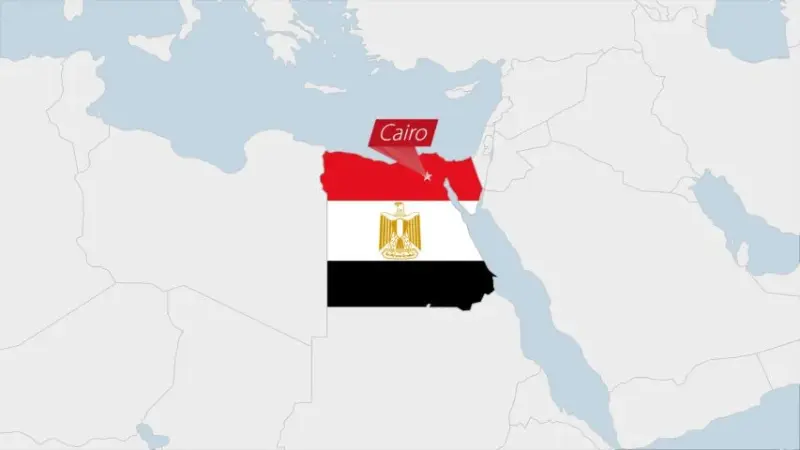
Religion in Egypt
In Egypt, Islam is the main religion, with almost 90% of the population being Sunni Muslims. Christianity, mainly represented by the Coptic Orthodox, is followed by roughly 10% of Egyptians. There exists an ancient religious history in the land containing innumerable mosques, churches, and temples.Tourism in Egypt
Tourism is one of the lifebloods of a nation's economy, providing millions of jobs for the people of that country. Egypt has the ancient wonders, culture, and breathtaking nature; no doubt, it is one of the countries that people visit most among all the others in the world. The attractions range from the pyramids right the way to the beachside attractions of the Red Sea, and Egypt has something for every kind of traveler. - Historical and Cultural Tourism Known as the land of history, Egypt is an ancient country. The Great Pyramids of Giza, the Sphinx, Luxor, and the temples of Karnak are among the finest archaeological sites in the world. The Valley of the Kings in Luxor is very much a must-see for lovers of history as pharaohs such as Tutankhamun spent their last days there. Cairo is a busy capital city and is home to the Egyptian Museum, reputed to have one-of-a-kind collections of artifacts, including treasures of Tutankhamun. -Religious Tourism It is a major religious tourism country. The Christian sites include Mount Sinai and St. Catherine's Monastery. For Muslims, it is Al Azhar Mosque in Cairo or the Islamic Cairo mosques with historical significance. The diversification of religions as well as the various cultures reflected by the country is an embodiment of that. -Coastal and Marine This is a wonderful place for a lot more of the world-famous Red Sea coastline cities like Hurghada and Sharm El-Sheikh because their waters include a very impressive environment full of diversified coral reefs and marvelous marine life. Here, heaven is for divers, snorkelers, and beach lovers. The Mediterranean coast, especially Alexandria combines both the history of the place with a bit of beach enjoyment. -Adventure in the Desert Through the Western Desert and the Sinai Peninsula, Egypt's deserts offer quite an adventure for adventure tourism. There are so many visits possible to the White Desert, Camping under the starry sky in the Black Desert, visiting the faraway Siwa Oasis, Desert Safaris, quad biking, and camel trekking. -Nile Cruises The exploration of Egypt is not complete without Nile River cruise. Tourists sail between Luxor and Aswan, halting along the way at ancient temples and some villages. These cruises are all about leisure interspersed with history and scenery. -Today's Attractions Beyond all the sites are modern attractions such as the Cairo Tower, luxury resorts, and vibrant markets like Khan El Khalili. There are also a fine collection of gastronomies and dynamic festivals to further make it attractive. Challenges and Recovery Today, the tourist sector in Egypt has gone through all rough patches because of political instability or events that affect the whole world. Despite all that, the government tried its best to raise the industry. By improved security measures, promotion campaigns, and improved infrastructures, the country has regained its standing as a preferred tourist destination.What to Visit in Egypt?
- The Great Pyramids of Giza and the Sphinx - One of the Seven Wonders of the Ancient World.
- Luxor's temples and the Valley of the Kings - Home to the tombs of ancient pharaohs, including Tutankhamun.
- Cairo - The bustling capital, featuring the Egyptian Museum, historic mosques, and vibrant bazaars.
- Aswan and Abu Simbel - Known for their stunning temples and scenic Nile views.
- The Red Sea Coast - Offers world-class diving and luxury beach resorts in places like Sharm El-Sheikh and Hurghada.
- The White Desert - A surreal landscape with unique rock formations.