
History of Aswan
Aswan is one of the largest cities in Egypt, famous in history. Aswan is thousands of years rich and diverse because it has served as a center of trade, military fortification, and cross-cultural interaction. The below overview tells you Aswan's history, stating its various historical periods and contributions: -Ancient Foundations and Strategic Importance Swenett or Syene as Aswan was known in antiquity was the southern boundary of pharaonic Egypt. It opened up Nubia and beyond under sub-Saharan Africa. Being at First Cataract of the Nile, it became the most important trading post where goods were traded like gold, ivory, ebony, and even exotic animals2710. From the city, quarries will now produce blocks of granite for the prestigious monuments, such as the Great Pyramid of Giza, for obelisks, and even temples213. Aswan was a very important religious center having temples for the honors of deities like Khnum, the god of the Nile's source1012 and Isis, goddess of magic and motherhood1012. -Pharaonic and Ptolemaic Eras Aswan was the primary point and the most southern area of Egypt during these two periods. It served as the frontier of pharaonic Egypt and a passage to Nubia and sub-Saharan Africa. Situated on the First Cataract of the Nile, it acted as the most important post for trade of such things like gold, ivory, ebony, and exotic animals' products. Aswan, the city born from the Egyptian word meaning "market," thrived as a center of trade between Egypt, Nubia, and the Red Sea310 in those Ptolemaic times. The Temple of Philae was dedicated to Isis that was built then and became the chief religious site during later times12. -Islamic and Modern Developments Aswan became an important cultural and educational centre, with institutions such as Al-Saifiah and Al-Najmiah schools erected during the 6th and 7th centuries AH3, during the Islamic period. The Aswan Low Dam was built during the 19th century and at the later stage, the Aswan High Dam was constructed. The latter was finalized in 1970. This thus changed the face of this region by controlling the protecting floods of the Nile, producing hydroelectricity and creating Lake Nasser211. Building the High Dam resulted in displacing such ancient temples as Abu Simbel and Philae, saving them from under Lake Nasser1012. -Cultural and Nubian Heritage Aswan is indeed a cultural point for the Nubians. Their music, traditions, and vibrant architecture tie very closely with the city's identity. Diversified Nubian villages, featuring their colorful houses, have hospitable visitors, giving a glimpse into this rich heritage912. The Nubian Museum of Aswan has artifacts and shows that tell the history of this area and how the High Dam affected Nubian communities. -Modern Aswan Today Aswan is developed as a major tourist destination for its ancient monuments, scenic beauty, and therapeutic climate along with industrialization; copper, steel, and fertilizer production are some of the industries built up here28. It is also part of the UNESCO Creative Cities Network in the folk art and crafts category, thus making it an important cultural heritage310.The Origin of Name Aswan
Thus, Aswan is informed by the derivation of the very ancient Egyptian word Swenett for "trade" or "market," in view of the important position it has historically played as a trading center. The Greeks called it Syene, famous for its use in calculating the Earth's circumference. Then came the Arabs, who named it Makka at-Abi intangible, which may essentially mean "opener" or "beginning," since the city serves as the gateway to Egypt and Nubia. Such a name signified not only its historical but also its geographical value as a crossroads of civilizations.Where Is Aswan In Egypt
Aswan is the city in southern Egypt located along the east bank of Nile River. It is also said to be the capital of the Aswan Governorate. It is around 880 kilometers, equivalent to 550 miles, southward from the capital city of Egypt, Cairo. Other geographical features of Aswan are the proximity towards the First Cataract of the Nile, a site which has been generally said to demarcate the southernmost area of Egypt from Nubia. The Aswan High Dam and Lake Nasser nearby further augment this city into a geographical and cultural site that is more significant in Upper Egypt.Where Is Aswan In Egypt On A Map
Aswan is the city that lies on the east bank of the Nile River in Southern Egypt. Find the spot on the map:- Search for the Nile River flowing all through Egypt.
- Trace the river downwards from Cairo, which happens to be the capital of Egypt, until the extreme south end of the country.
- Aswan is almost attached to the First Cataract of the Nile while a little bit near Sudan borders.
- It is just north of Lake Nasser, a massive reservoir from the Aswan High Dam.
- Aswan on most maps is marked as a very important city in Upper Egypt, as it is a gate to Nubia and sub-Saharan Africa.

Where Is Aswan Located In Ancient Egypt
This is exactly way back into the history of Egypt. Aswan was originally known as Swenett or Syene. Its location was southern Upper Egypt, the southernmost part of the country. It was the southern frontier of ancient Egypt and the neck of the boundary between Egypt and Nubia (now Sudan). Major ancient location information:- The site is at the First Cataract of the Nile, a natural impediment of rocky rapids that separates Egypt from Nubia.
- - Aswan connected Egypt to Nubia and sub-Saharan Africa for trade. The site was famous for its granite quarries.
- Aswan was a part of the 1st nome (district) of Upper Egypt, called Ta-Seti ("Land of the Bow"), illustrating its role in outpost military and trade missions.
Weather in Aswan
The climate around Aswan, Egypt, is largely warm and dry, the most outstanding of which is in January of the year 2025. Here's the summary of the weather, based on what the search returned: Weather Overview for January 2025 Temperature:- Highs on average, mostly during the day, are from 23°C-31°C (73°F-88°F) and at night would be 10°C or lower, some reaching as low as 7°C (45°F)128.
- The warmest days will be expected to be around mid-January, peaking at 31°C (88°F)28.
- Typically dry, with no rain expected through the month125.
- Aswan has sufficient sunshine, about 3.9-10 hours per day sunlight15.
- Light to moderate wind speeds range from 5 to 20 km/h39.
- Daytime will be 23-31 degrees Fahrenheit with night registering temperatures between 10 degrees C and 19 degrees C239.
- Overall skies are either mostly clear or partly cloudy; none will expect rain39.
- Things start cooling off, and the high drops to about 20 degrees C to 26, with night low dropping to 7 degrees C to 14 degrees89.
- Dry and sunny89.
Why Is Aswan Important To Egypt
n the following, the original text is provided flanked by all quotations:- Historical and Cultural Significance
- Location Strategic
- Economic Importance
- Modern InfraStructure
- Environmental and Scientific Importance:
- Cultural and Artistic InfluencePoints:
What Is Aswan Famous For
- Old-World Monuments and Shrines are:
- Temples at Abu Simbel: These are colossal rock-cut temples built by Ramses II for himself and Queen Nefertari, and they are perhaps among the most popular in Egypt.
- The temples were moved to escape the rising waters of Lake Nasser.
- Philae Temple: Temple complex devoted to goddess Isis that is located on Agilkia Island and famous for its beautiful architecture and reliefs.
- Unfinished Obelisk: One huge granite obelisk still lying in its quarry, gives an idea of how stone-cutting was done in ancient Egypt.
- Nubian Culture
- The Gateway To Nubian Culture Aswan is a cultural center for the Nubian people and their rich and colorful traditions, music, houses, and hospitality.
- It has Nubian villages like Gharb Soheil, where visitors can seek to know this culture.
- Nubian Museum: Artifacts and exhibitions showcasing the Nubian past and heritage.
- In Nile and Scenery
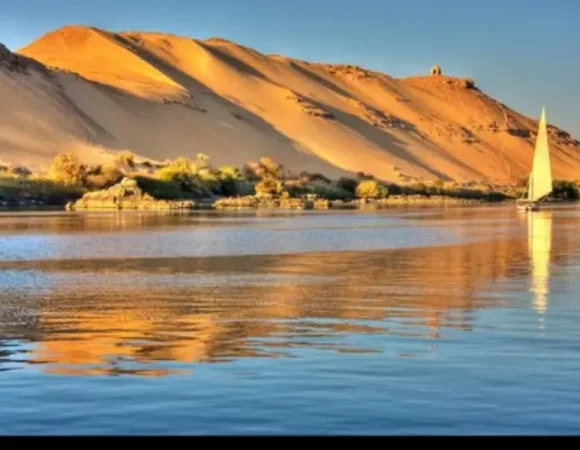
- Aswan has the clearest blue waters twisted by the most lush and green islands and surrounded by the finest golden desert landscapes showcasing the Nile River.
- Elephantine Island: The island consists of antique ruins, a museum, as well as Nubian villages. Kitchener Island (Botanical Garden): A calm, excessively lush island showcases many exotic plants and trees.
- The Aswan High Dam
- was invented by the most indispensable engineering decades in the 20th century.
- It is today taking control of the floods on the Nile, runs the electric power generated from hydroelectric power, and has given rise to the gigantic artificial lake, Lake Nasser.
- Granite Quarries
- The ancient granite quarries of Aswan served to provide building materials for many of the Egyptian monuments, like the pyramids, the obelisks, the statues, etc. The legacy is well preserved in a remaining obelisk, termed as the Unfinished Obelisk.
- Laid-back Atmosphere
- Aswan is a place relatively less frenetic in life than other Egyptian cities, such as Cairo, or Luxor. In its country, it is less traveled to that destination where travelers go with their empty capsules.
- Historical Importance:
- Aswan served as the southern border of ancient Egypt and the gateway to Nubia and Sub-Saharan Africa.
- It thus played a very important role in trade, military campaigns, and cross-cultural exchange.
Aswan People
- Nubian Heritage
- It is here in Aswan that a greater number of people hold that place sacred; that is also the hub of culture for people who form the ethnic group called Nubians, found along the region of Nubia which constitutes southern Egypt and northern Sudan.
- Nubian Culture: The Nubians are fondly remembered for their colorful traditions and flamboyant clothing, as well as music and dance. Mud-brick houses, each painted in several bright colors and decorated with figures, are mostly found in Nubian villages like Gharb Soheil and even Elephantine Island.
- Language: In addition to Arabic, many Nubians communicate using Nubian language (Nobiin or Kenzi-Dongolawi).
- Hospitality: Most famously, Nubians are noted for their welcoming lifestyle as they tend to invite most visitors into their homes for traditional tea or food.
- Traditional Lifestyle
- The people of Aswan live a very slow traditional life very much related to the Nile as well as to the surrounding desert.
- Agriculture: Most of the population is engaged in agriculture and farming, growing crops like dates, sugarcane, and vegetables in the fertile banks of the Nile.
- Fishing: Even fishing forms the other source of income wherein the Nile abounds with various types of fish.
- Crafts and Artistry
- Handicrafts of Aswan include pottery, basketry, and jewelry; Nubians are also famous for their creativity and craftsmanship, making their products attractive to tourists.
- The city is a member of the UNESCO Creative Cities Network in the folk arts and crafts category, showcasing that city's culture in these areas.
- Modern Religious and Cultural Diversity
- Aswan is inhabited by both Muslims and Christians; this makes it part of the larger situation of religion in Egypt.
- It has an excellent history of religious coexistence, as ancient temples, mosques, and churches thrived side by side.
- Influence of the Modern
What to see in Aswan
- Temples of Abu Simbel
- Philae Temple
- Unfinished Obelisk
- Elephantine Island
- Nubian Villages
- Aswan High Dam
- Kitchener's Island (Botanical Garden)
- Tombs of the Nobles
- Nubian Museum
- Felucca Ride on the Nile
Best Things To Do In Aswan
- Visit the Tombs of the Nobles
- Attend the Philae Temple Sound and Light Show
- Visit Aswan Souk
- Visit the Temple of Kalabsha
- Trek to the Monastery of St. Simeon
- Take in the view while sitting at a café next to the Nile.
- Visit Sehel Island
- Take a Lake Nasser Cruise
- Visit the Fatimid Cemetery
- Visit the Aga Khan Mausoleum
- Enjoy Nubian Food.