What Is Luxor And Where
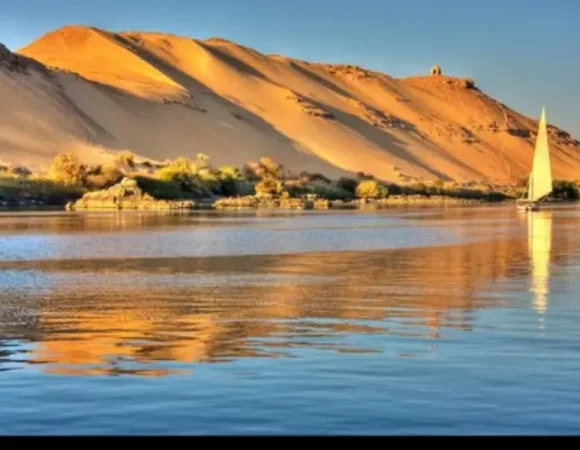
Without a doubt, all those who would appreciate history and ancient scuba wonder, this is the best city on earth — the one which is referred to in Arabian as: an outdoor museum.: It is located in Luxor which is positioned on the eastern bank of the Nile River in delta Egypt. It was referred to as Thebes many centuries ago and it is known as the capital of the ancient civilization. Travelers qualified to be engulfed with love towards hotos handheld into many famous temples and tombs many temples places grabbing off entertainment towards tourists everywhere. The Nile is split into two banks: on the eastern banks sit the modern town of Luxor with all its features like Luxor Temple and the great Temple of Karnak. All these temples were part of the religious and political worship of Amun-Ra, the sun, who appears in Nationals Capital.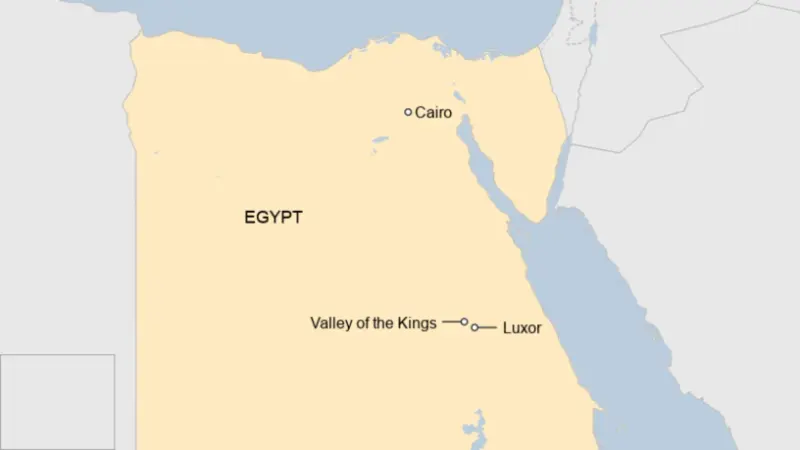
Places To See In Luxor Egypt
1- Temple of Karnak
Karnak Temple, built during the Middle Kingdom era, is divided into three compounds dedicated to the Theban triad: Amun, Mut, and Khonsu. The massive complex of pylons, chapels, and shrines on the east bank of the Nile was built over a thousand years between the 12th and 20th dynasties, serving as an important legacy to Egyptian cultural history and the efforts of dozens of pharaohs.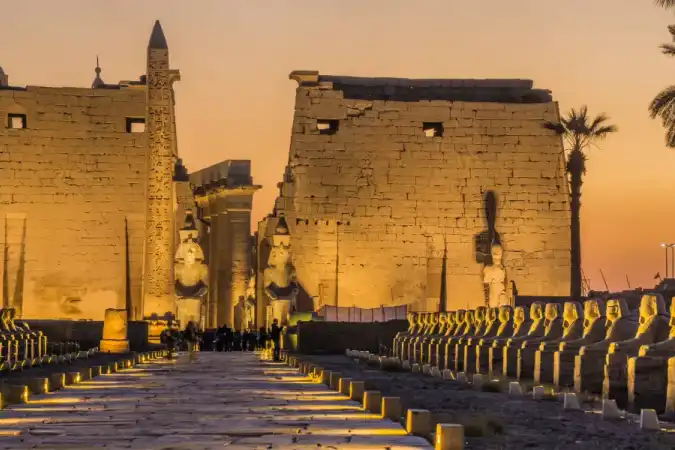
2- Valley of the Kings
An ancient burial ground for excavated tombs of New Kingdom aristocrats is formed by two dry river valleys divided into east and west banks, similar to Luxor city. The Valley of the Kings is located beneath Al Qurn Mountain in the east and was excavated deep into limestone cliffs to thwart tomb raiders. The valley contains around 60 ancient Egyptian tombs, including the tomb of young pharaoh Tutankhamun, which was found in 1922. Beginning around 1550 BC, pharaohs, nobles, and royals from the 18th to 20th centuries were buried here with their valuables in preparation for the afterlife. The world-renowned archeological site is a highlight of a Luxor vacation, with a paid visitor center and a restricted number of tombs open to the public at any time to control potential damage. A weekly "Sound and Light Show" in ten different languages fills the evenings at the Unesco World Heritage-listed temple. The hour-long walking tour eloquently recounts the history of the pharaohs, with eerily mesmerizing lights dancing over the amazing religious display.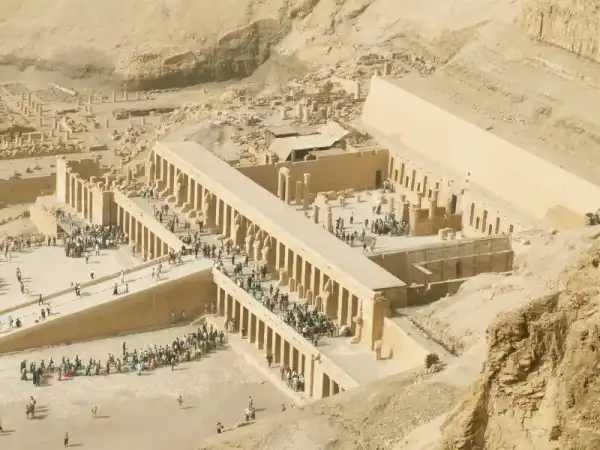
3- Luxor Temple
The Nubian sandstone Luxor Temple, also known as the "Southern Sanctuary" in ancient Thebes, is one of the best-preserved sites to visit in Luxor. The World Heritage complex on the east bank, built in 1392BC, is thought to be the site where pharaohs were crowned during the annual Festival of Opet festivities, a ritual practice dedicated to the revitalization of kingship and rebirth during a pharaoh's coronation ceremony.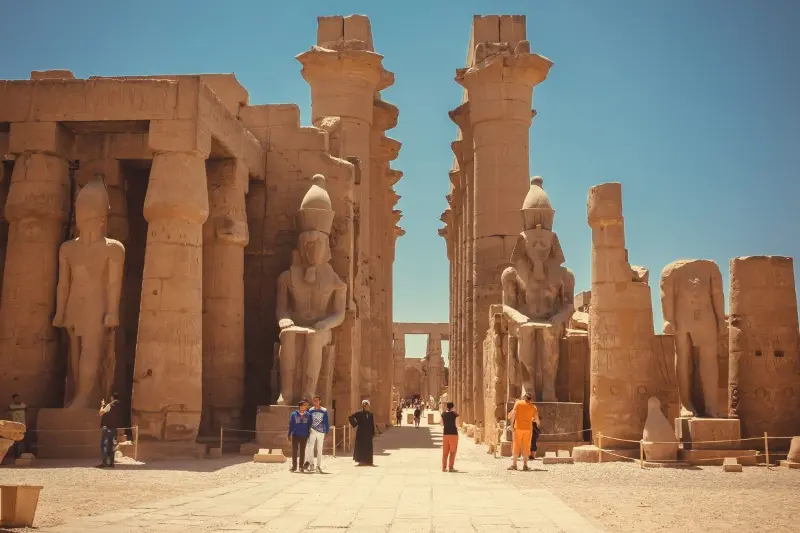
4- Temple of Deir al-Bahri (Queen Hatshepsut's Temple)
The Mortuary Temple of Queen Hatshepsut, located on the cliffs of Deir el-Bahari opposite Luxor City, is one of Luxor's most recognizable landmarks. Hatshepsut, a queen who declared herself pharaoh of Egypt's 18th dynasty, began her astonishing 15-year reign in 1473BC. Senenmut, the royal architect, oversaw the construction of the stately three-level architectural mirage, where painted relics line the walls to preserve her reign's legacy, which is immortalized in the temple's Chapel of Anubis, god of embalming and the cemetery, and the Sanctuary of Amun, a king of the Egyptian gods.5- Avenue of the Sphinxes
As you enter the Luxor Temple grounds, you are met by the Avenue of Sphinxes and a multitude of tall statues of Egyptian monarchs. There are many courtyards beyond the temple walls, including Rameses II's Great Court and Amenhotep III's Sun Court.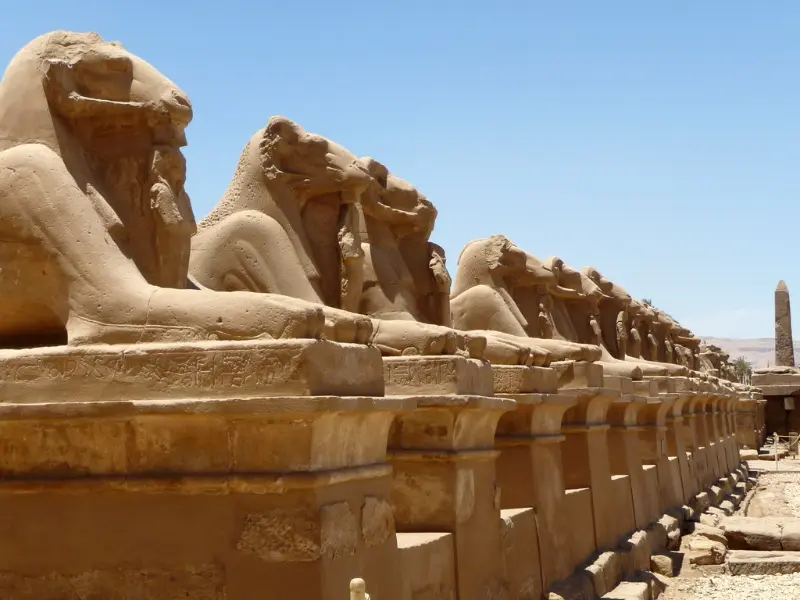
6- Colossi of Memnon
The Colossi of Memnon are frequently the first things you notice when you arrive in the West Bank. The two faceless statues are pretty impressive, rising 18 metres into the air. They signified Amenhotep III and his immense authority. During the Roman administration of Egypt, the statues became popular tourist attractions after the Romans renamed them in honor of King Memnon, who was killed in the Trojan war.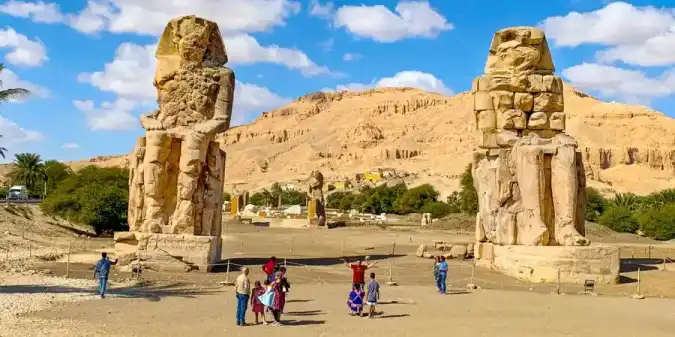
7- Valley of the Queens
The Valley of the Queens contains the burial sites of numerous Egyptian queens, princesses, and princes. It was originally erected for Pharaoh's wives who were unable to be buried in the neighboring Valley of Kings. This is the major burial location for Egypt's outstanding and prominent queens from the 18th to 20th dynasties.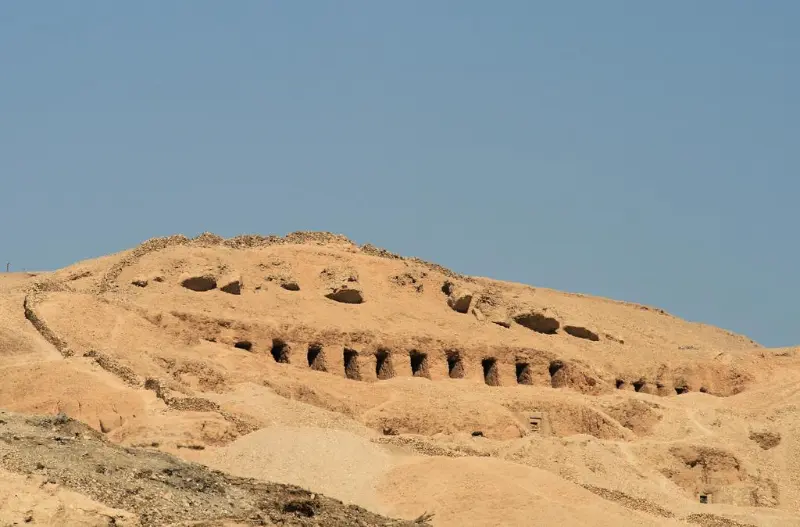
8- Tomb of Tutankhamun Replica & Carter's House
Tutankhamun was ancient Egypt's famous kid king, but if his grand tomb had not been discovered, he would have slipped into obscurity. In fact, the discovery of Tutankhamun's burial chamber (also known as tomb KV62) was one of Egyptology's most momentous occurrences, and King Tut quickly became a household name.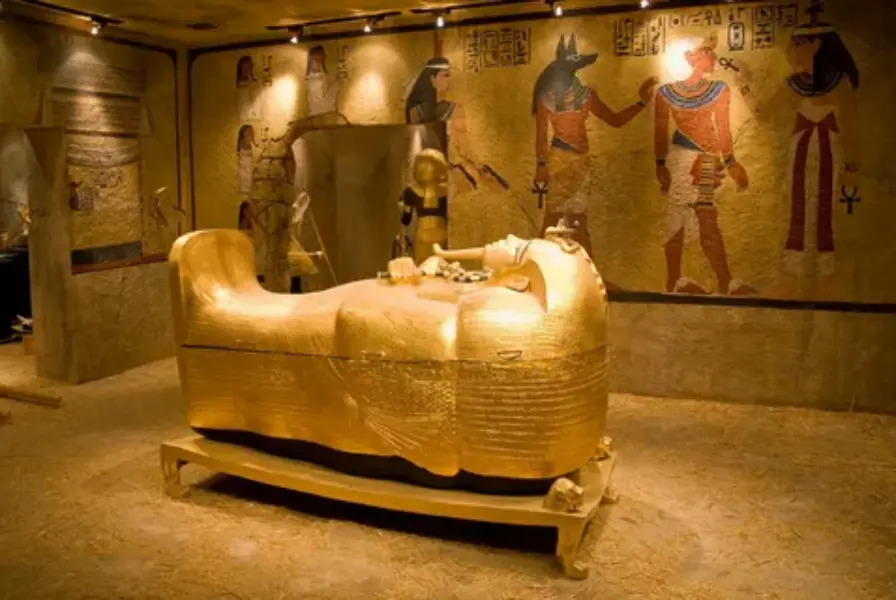
9- Luxor Museum
Another popular attraction in the city is the Luxor Museum. This museum chronicles the history of Luxor from ancient times, when it was still known as Thebes, until the present day. There are several museums that display statues and artifacts such as amulets, jewelry, and tomb furnishings. The re-erected Akhenaten Wall is one of the museum's most cherished artifacts.
10- Ramesseum
The Ramesseum is a memorial temple in Upper Egypt's Theban Necropolis, located on the Nile River's west bank, opposite the modern city of Luxor. It was constructed by Pharaoh Ramesses II, often known as "Ramesses the Great," during his 67-year rule in the 13th century BC. The temple, which was devoted to the deity Amon and the slain pharaoh, is still one of ancient Egypt's largest and most spectacular monuments. The Ramesseum is famed for its 57-foot seated figure of Ramesses II, of which only pieces exist. The temple walls are adorned with reliefs depicting the pharaoh's military campaigns and religious ceremonies.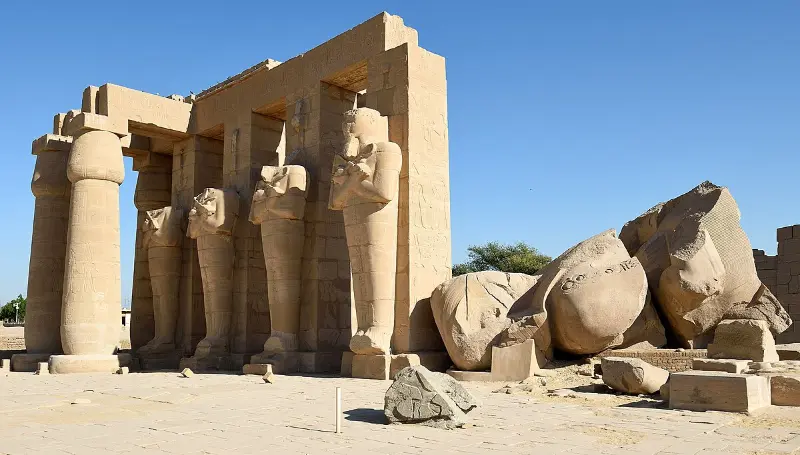 Also Read about: where is aswan dam located
Places To See In Luxor Egypt Other Than Temples
1- Felucca Ride to Banana Island
Traditional wooden felucca boats with white canvas sails have been sailing the Nile River since the time of the pharaohs, providing a smooth voyage to North Luxor's Banana Island. The pleasant Egyptian breeze makes short trips crewed by local sailors easier, as they sail past abundant banana plantations and are accompanied by fresh fruit, Egyptian mint tea, and bird colonies. Relax on the comfy cushioned deck on the way home and enjoy the gorgeous sunset over the West Bank, which is framed by broad farmlands and the calm waves of Egypt's most famous river.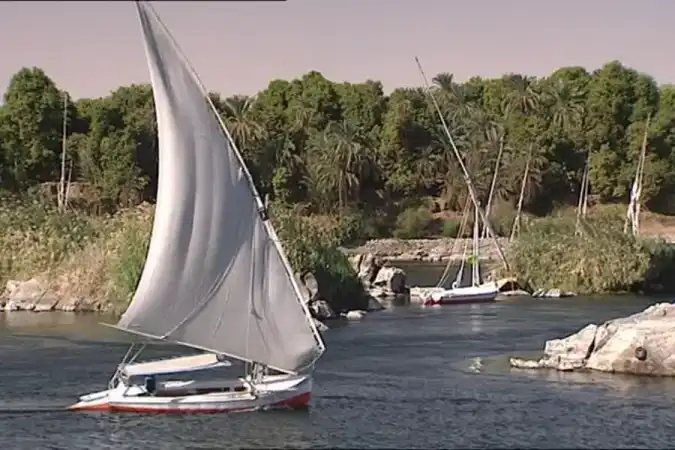
2- Hot Air Balloon Ride over Luxor at Sunrise
Take to the skies at sunrise for a bird's-eye view of the West Bank archeological museum, and join the sea of colorful hot-air balloons that drift over Luxor. On a bucket-list ride, you'll see the Valley of the Kings, Valley of the Queens, Colossi of Memnon, and the Nile River from a different perspective. A plethora of tour firms with professional pilots offer to transport travelers to unforgettable new heights over ancient Thebes, including a small breakfast and traditional tea served in the balloon basket as you travel past ancient monuments and magnificent city views.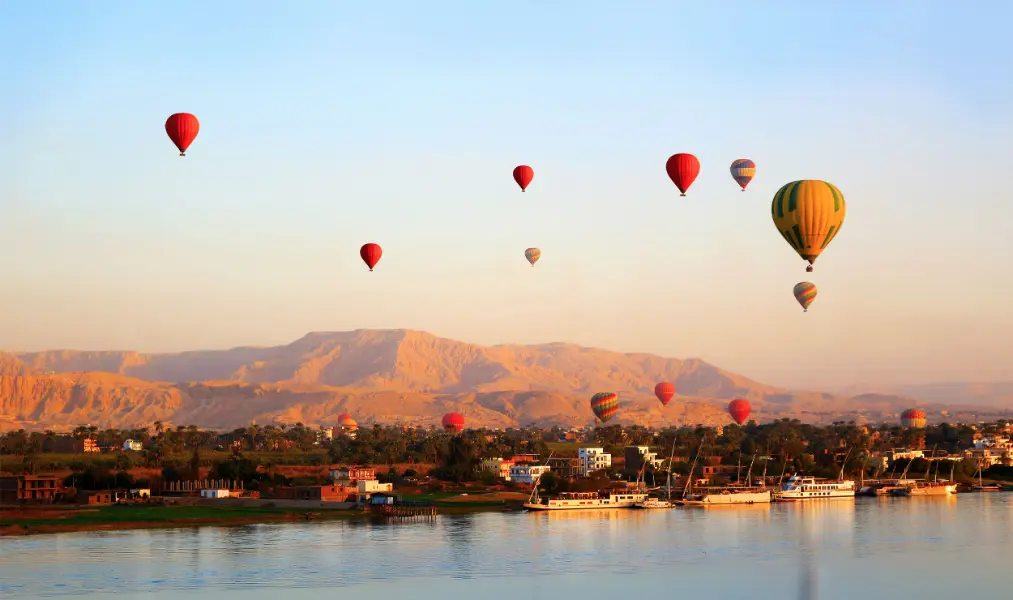
3- Haggle at El Souk
The souk is a maze of jewelry, leather, and incense. View image in gallery. The souk is a labyrinth of jewelry, leather, and incense. (Getty Images/iStockPhoto) El Souk street market near the Luxor Temple sells everything from keffiyeh scarves to Middle Eastern spices. Weave your way through the atmospheric center, where the energetic shopkeepers are willing to negotiate for the best deal on handmade pottery, fragrances, and carpets. The pedestrian market extends across several streets, with crowds of popular cafes and wooden booths selling brass trays full of trinkets at reasonable prices.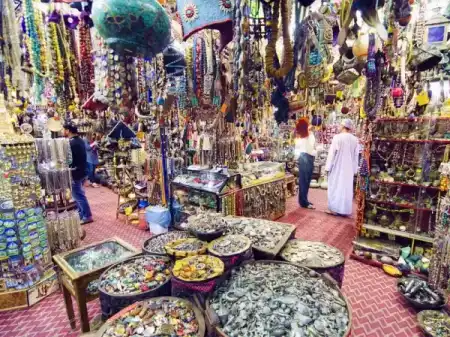
4- Sip beverages in the Winter Palace
Agatha Christie penned Death on the Nile while staying at the hotel. See image in gallery. Agatha Christie penned Death on the Nile while staying in the hotel (Getty Images).) Sofitel's Winter Palace, steeped in romance and history, is the ideal place to sip herbal tea or drink icy beers in the late afternoon light. The old colonial-style hotel in the heart of Luxor, which opened in 1907, has welcomed both aristocrats and literary greats. The Nile vista terrace is also where Agatha Christie wrote Death on the Nile.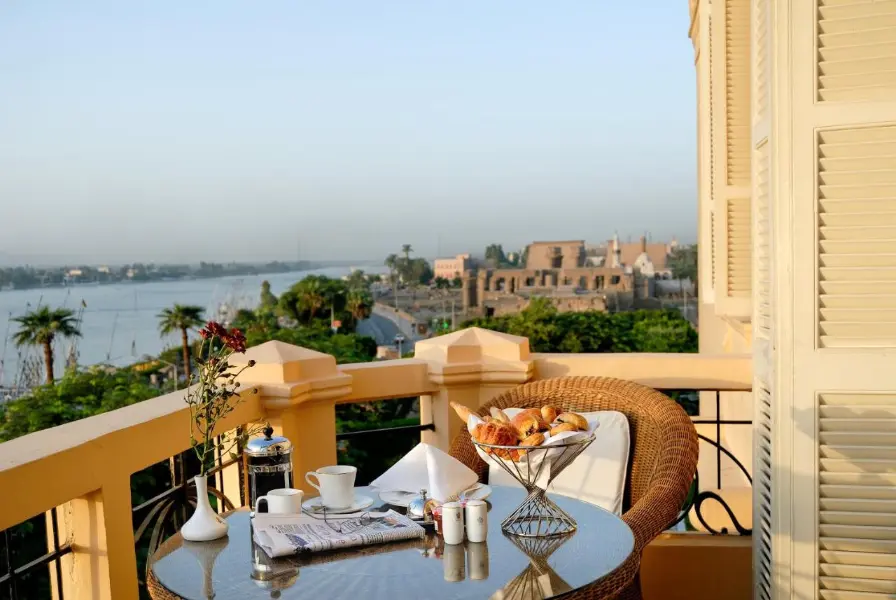
5- Eat Bedouin style.
Enjoy delicious mandi, imbakbaka, and libbah bread. View image in gallery. Enjoy generous servings of mandi, imbakbaka, and libbah bread. (Getty Images/iStockPhoto) Luxor is a melting pot of communities and cuisines, and the Nile Valley farmlands provide a bountiful source for foods like mandi spiced beef. For a tantalizing taste of the past, try substantial dishes of Bedouin-inspired cuisine like imbakbaka tomato broth pasta and madfoon beef and rice. Dine with the locals in traditional khayamiya tents or at rooftop tables for two with Nile views, and visit real restaurants like Bedouin Island on the West Bank. Historically, Bedouin cooking in underground earth ovens or on open fires was supposed to impart flavors.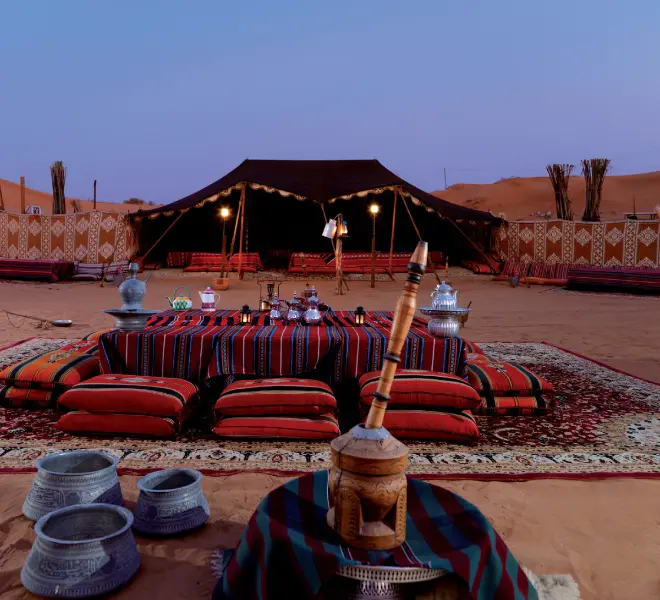
Places To See In Luxor Egypt At Night
1- Take a horse-drawn carriage trip along the Corniche
Taking a horse and carriage trip in Luxor is quite unique. I get what you're thinking: far too pricey! However, compared to the West, horse and carriage journeys here are extremely inexpensive. It's a lot of fun to ride down the Corniche by the Nile and through the city. You can see the ships, the Luxor Temple, the mosques, hear the call to prayer, and even walk through the market.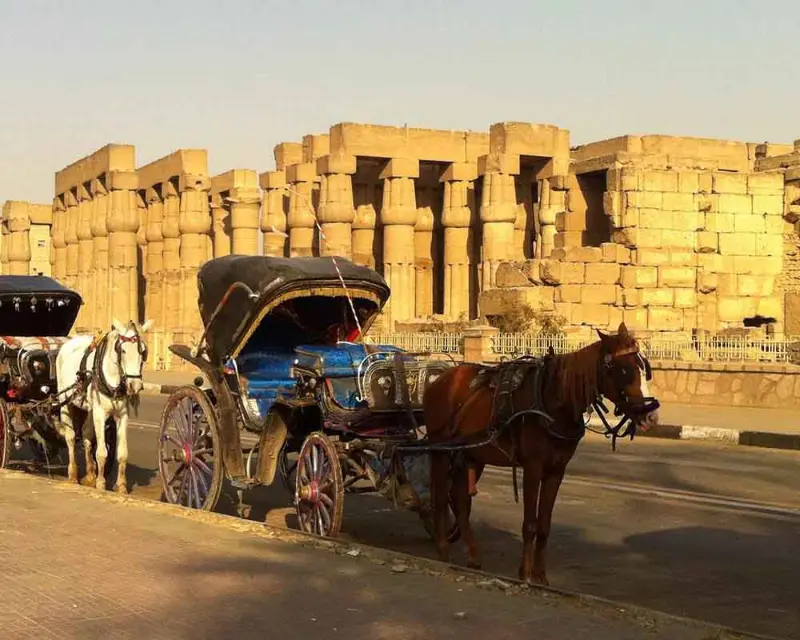
2- Enjoy delicious traditional Egyptian cuisine at Sofra.
Sofra is unquestionably the best restaurant in Luxor. It is highly praised in all guidebooks, and I must agree. I ended up eating here twice since the food was so delicious! The menu is a tour through Egypt, featuring numerous traditional foods and local tastes. On reflection, I did not have many fantastic meals in Egypt, but Sofra stands out as one of the best.3- Dine in the Winter Palace and have a nightcap at the Royal Bar.
Even if you are not a resident of the Old Winter Palace, you can still visit its eateries, including 1886 and the Corniche. 1886 is a formal elegant restaurant, whilst Corniche serves an outside BBQ buffet in their lovely gardens.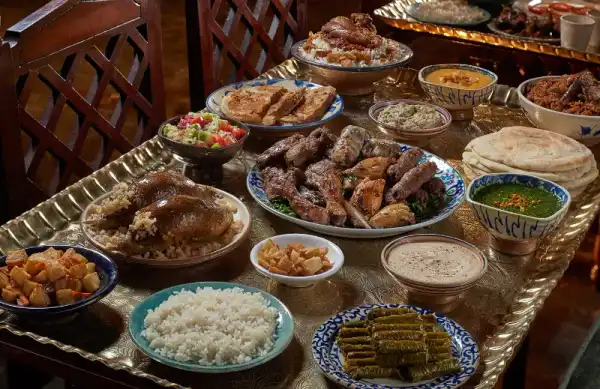 Also Read about : 15 Fascinating Abu Simbel in Egypt Facts to Discover
How To Get To Luxor
- Catch regular buses and trains from Cairo and other major cities in Egypt.
- Luxor International Airport (LXR) serves a wide range of domestic and international destinations.
- Arrive in Luxor via Nile cruise.
- Hire a cab or a driver to take you from the airport to your accommodation.
Best Time To Visit Luxor
The best time to visit Luxor is during the winter, between November and February 1. Temperatures range between 20 and 25 degrees Celsius (68 to 77 degrees Fahrenheit). According to NOAA average temperature and humidity statistics, the optimum time to visit Abu Simbel is from November 12th to March 25th. Weather-wise, the best months to visit are October to April, when daytime temperatures are significantly cooler. Based on typical weather, the best months to visit are January, February, and December, and you can take advantage of our Cairo, Aswan, Luxor and Abu Simbel Tour to see the best sights.How Many Days To Spend In Luxor, Egypt?
Ideal Duration: 2-3 Days: It may be two or three days, but you will not miss out on the major attractions. It will not take long for you to see Luxor since this is a city with a lot of diverse historical sites so you will definitely get to cover a lot of places even if you’re here for just a few days. Suggested Itinerary: Day 1: There is another recommendation for a day based tour of Egypt, wherein visitors stay for the day in the town and get accompanied by a local guide in the morning. First stop, visit the Karnak Temple complex in the morning. Again, you can check out Luxor Temple in the evening, when it is gorgeous with lights on it. Another option suggested is to visit the Valley of Kings the whole day where the most famous tumulus of King Tutankhamun and the Temple of Hatshepsut are surrounded. Don't forget to stay for the day, on the west bank, to grab a look at the Valley of Kings, Including the most famous tomb of King Tutankhamun, and Temple of Hatshepsut. Day 3: Travel to the Valley of the Queens and Medinet Habu, the Mortuary Temple of Ramses the third. Options include the Colossi of Memnon and the Ramesseum. However, if you want to cover more places along those lines, you can start with the Valley of the Queens and Milad and Western regions of Egypt, the tomb temple of Ramses the third. Longer Stays: 4-5 Days: It is perfect for a more relaxed pace; you will have time to see pyramids, and temples, experience less popular places, enjoy the Nile River cruise, and have an early morning hot air balloon ride on the West Bank. 1 Week or More: It gives you the chance for a fuller assimilation into life that is a visit not only to city attractions such as the Temple of Dendera or Abydos but also the relaxing days on the river and exploring the local souks.How Much Money Do I Need For Luxor, Egypt?
The cost of visiting Luxor, Egypt, is one of the factors that is influenced by the style of your traveling and your length of stay. Here's a rough breakdown for different budget categories:- Budget Traveler
- Mid-Range Traveler
- Luxury Traveler
What To Pack For Luxor, Egypt?
Luxor is several hours' drive south of Aswan, but most tourists fly to luxor as they usually visit Egypt . The flight from Aswan takes only 30 minutes, and there are two flights every day, timed so that travelers have around two hours to visit the temples. It is also feasible to visit Abu Simbel on a Lake Nasser cruise.Is Luxor Egypt Safe For Tourists
Yes, Luxor, indeed, is truly one of the safest places for tourists in the country, calling to its historical importance, and this city is treated as a popular one. Here are some details to consider: General Safety:- Tourist-Friendly: Although Luxor has now become a focus of the tourist industry, local people have already adapted to the presence of tourists long ago. Thus, there are some schemes that have been made to provide visitors with the safety and comfort they need.
- Low Violent Crime Rate: Moreover, the kinds of crimes involving violence that tourists have to deal with are not common in Luxor either. There is, of course, the theft of personal belongings by pickpockets, yet it is not as common as in many of the world's biggest cities.
- Stay Aware: Like any other tourist place, it is necessary to alert your senses and be observant of your surroundings. Watch your things and don't show off large amounts of money or valuable items.
- Hire Licensed Guides: While visiting ancient sites, the best option is to hire a guide with a license or join a trusted tour group, which will make your exploration more interesting and safer.
- Respect Local Customs: One of the ways to not attract unnecessary attention to you is to pay respect to the local customs and traditions. Modest dressing is encouraged, especially at religious sites.
- Stay Hydrated and Protected: The Luxor weather can be extremely hot, particularly in summer. Thus, you should drink plenty of water, wear a sunblock, and use hats or light scarves to protect yourself from the sun.
- Use Trusted Transport: It is better to use official taxis or other reputable ride services. A lot of tourists in Luxor go for organized tours or private drivers, which are the usual and safest modes of transport here.
- Police Presence: To guarantee security, the Egyptian government has placed visible police and tourist police in the vital areas, particularly near the major historical sites.
Places To Visit Near Luxor Egypt
Medinet Habu
Medinet Habu is a massive complex that comprises Ramses III's mortuary temple and ranks second only to the Karnak Temples in size. The Egyptians revered the location from ancient times, believing that it was the first appearance of the god Amun. The New Kingdom's pharaohs were buried in the Valley of the Kings, but after their deaths, they built huge temples to revere as gods. Excavations on the site began in 1859 and continue to this day, revealing ever more remarkable relics and insights into the past.Deir el-Medina
Deir el-Medina also known as Dayr al-Madīnah, was an ancient Egyptian workmen's town where artisans worked on tombs in the Valley of the Kings from the 18th to 20th Dynasties of Egypt's New Kingdom (ca. 1550-1080 BCE) The settlement's original name was Set maat ("Place of Truth"), and the workers who resided there were known as "Servants in the Place of Truth. During the Christian era, the temple of Hathor was turned into a Monastery of Saint Isidorus the Martyr Mortuary Temple of Seti IDay Trips from Luxor
- Day Trip to Kom Ombo.
- Dendera Temple Complex
- Abydos Temple
- Aswan