
I'll be honest with you — Egypt wasn't supposed to be a place I kept coming back to. One trip, see the pyramids, check it off the list. That was the plan. But something happens when you're there. Someone at a tea shop mentions a town you've never heard of, and three weeks later, you're trying to figure out how much time off work you can realistically justify.
This isn't a polished brochure rundown. It's just the towns that actually stuck with me — the famous ones that earned their reputation and the quiet ones that most people drive straight past without a second thought.
First, Understand How Big This Country Is
Seriously, look at a map before you start planning. Egypt isn't the compact little country a lot of people picture. It stretches from the Mediterranean all the way down to the Sudanese border — the distance between Alexandria in the north and Aswan in the south is roughly equivalent to driving from London to Morocco. One country, but wildly different worlds depending on where you are. Knowing the regions before you start helps everything make more sense.
Northern Egypt
The north exhibits a complete distinctiveness which differs from all other regions across the nation. The Mediterranean climate maintains lower temperatures, while fish appears in every dish, and the cities display an energy which combines rapid movement with loud sounds and passionate arguments, which I consider to be a positive quality. People here will debate you about something completely minor with a huge grin on their face. The situation exists in a state of disorder, which brings enjoyment to everyone.
The city of Alexandria serves as Egypt's second-largest urban center which people from Alexandria consider their home. Alexandrians don't fully identify as Cairenes because this area maintains a Mediterranean identity that developed through centuries of Greek, Italian, and Jewish communities who once settled here. The corniche becomes alive in the evening time when you take a walk through it. The seafood restaurant offers some of the best seafood I have ever eaten. The old building design shows its beauty through deteriorated architecture which shows authentic aging instead of modern restoration that creates uniformity.
Rosetta — or Rashid if you're going local — is the town most tourists skip, which genuinely baffles me. Yes, the Rosetta Stone came from here. But even setting that aside, the old Ottoman merchant houses along the Nile are lovely in a sleepy, unhurried way that's getting harder to find. Go. You won't regret it.
Tanta is the biggest city in the Nile Delta and almost completely invisible to foreign tourists. Once a year it hosts one of Egypt's largest religious festivals and the whole place transforms — hundreds of thousands of people just materialize in what is otherwise a perfectly ordinary Egyptian city. If your trip happens to line up, don't miss it.
Port Said has this strange colonial atmosphere left over from when the Suez Canal was the center of the world's attention. It's also duty-free, which means Egyptians from all over the country come here specifically to shop. Worth a wander.
Mansoura is a university city with one very particular source of civic pride — it's where the Crusaders got defeated in 1250. The locals bring this up. They enjoy bringing this up.
Damietta is a working port where the Nile meets the sea. Not glamorous, but real. It's famous throughout Egypt for its furniture makers and woodworkers, and there's something satisfying about a town that's just good at a thing and has been for centuries.
Upper Egypt
This is the ancient part. The Nile valley extends from Cairo to Sudan which contains Pharaonic monuments in such abundance that they become ordinary until visitors discover actual sites. The heat here reaches extreme levels. The speed of movement decreases to a slower tempo. The northern region of the landscape maintains its developed state while the southern part displays untouched natural beauty.
I find it difficult to explain Luxor because all my words create an impression that exceeds its actual value but I believe you need to experience everything when visiting this place. The entire modern city sits on top of ancient Thebes. The monuments exist throughout the area as they maintain their exceptional condition which I need to see multiple times because every visit shows me something I have not seen before. The single site of Karnak Temple provides enough worth to make people travel between continents. My statement contains no exaggerated elements.
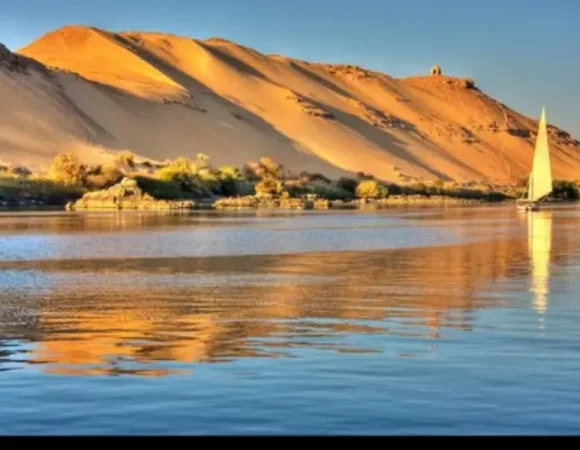
Aswan offers visitors a peaceful experience which serves as a soothing contrast to the energy of Luxor. The strong Nubian cultural identity creates an atmosphere that makes this place totally different from all other Egyptian locations. The Nile River environment during late afternoon hours remains permanently imprinted in my memory from my first visit. The experience transforms your entire being.
Minya is my preferred answer for people who seek unconventional travel destinations that their travel plans do not include. The Beni Hassan tombs represent exceptional burial sites that receive international recognition. The abandoned city of Akhenaten at Tel el-Amarna presents a chilling abandoned atmosphere because it reveals what historians attempted to destroy from memory. You will probably find both spaces to be almost vacant. The situation has become less common throughout Egypt.
Asyut is the commercial center of the south — busy, unpretentious, with a significant Coptic Christian community and markets that have clearly never been adjusted for tourist comfort. Which is exactly why they're worth visiting.
Qena is worth the trip for one reason specifically: Dendera Temple. The painted ceilings inside have held their color for two thousand years. You walk in and you just stop walking. It takes a minute to process.
Sohag is small and genuinely unhurried, with two ancient Coptic monasteries nearby that date back to the very early centuries of Christianity. Easy to overlook, and I think that's part of why I liked it.
Greater Cairo and the Towns Around It
Cairo is a city that breaks every attempt to summarize it. It's enormous and contradictory and will exhaust you completely and somehow you still don't want to leave. The towns around it have mostly just become more Cairo at this point.
Giza is technically its own governorate but the border with Cairo is completely invisible on the ground. The pyramids are here. The Sphinx is here. And I know that sounds obvious, but — they're genuinely as impressive in person as you hoped. Maybe more.
Maadi is a leafy southern suburb where Cairo's expat community has settled for decades. Tree-lined streets, good coffee shops, and a quiet that feels almost surreal when you remember the chaos happening a few kilometers away. Nice place to stay if you want a calmer base.
New Cairo to the east is where a huge chunk of Cairo's middle class has relocated over the past decade. Modern, organized, and feels like a completely different city from the historic center.
6th of October City to the west was purpose-built to absorb Cairo's overflow and has grown into a proper urban center. Interesting if urban planning is your thing.
The Sinai
The desert region of Sinai exists as a dramatic triangle that lies between the Gulf of Suez and the Gulf of Aqaba which contains a mountain range that runs through its center. The main part of the population consists of Bedouin people whose traditional way of life differs from all other Egyptian communities. You experience a border crossing even though you have not left the country.
The southernmost point contains Sharm el-Sheikh which serves as the main resort destination. The area has extensive development which attracts numerous visitors while its diving sites near Ras Mohammed rank among the top diving locations worldwide. No qualifications required. The system meets your needs for diving if you plan to dive.
Dahab exists at a distance of 100 kilometers from Sharm and presents itself as an entirely different world. The village attracts backpackers who come to experience its slow-paced atmosphere while serious divers and yoga retreat participants use its facilities. The Blue Hole diving site which exists outside the city limits has achieved legendary status because of its stunning beauty and its frightening realities.
The majority of drivers use Nuweiba as their main route. The beaches remain deserted while the area moves at a slower pace than Dahab which enables visitors to experience actual time with Bedouin families at this location.
Saint Catherine exists as a small mountain settlement located at the base of Mount Sinai. The monastery has permanent residents who have lived there since the sixth century while it contains one of the world most significant archives of ancient manuscripts. The mountains surrounding the area possess a sacred quality that people can easily perceive when they stand in the mountains during the first light of dawn.
The city of El Arish serves as the primary urban center of North Sinai which shows authentic Egyptian character through its Mediterranean palm groves and its resort towns that stretch to its southern border. The city requires present travel advisories to be checked before visitors make their travel arrangements. The security problems in North Sinai have persisted for several years which has led most government bodies to recommend that people should exercise caution.
The Red Sea Coast
Thirty years ago this was just desert. Now it's hundreds of kilometers of resort towns, and the remarkable thing is that the underwater world that originally drew people here is still largely intact.
Hurghada went from a fishing village to a major international destination in a single generation. It's busy and commercial, but the water is beautiful and getting there from most of Europe is straightforward. Good for a first trip or when you just want something easy.
El Gouna was literally built from nothing on a network of lagoons north of Hurghada. More upscale, more thoughtfully designed. It has a genuinely pleasant atmosphere that's unusual for a purpose-built resort town.
Marsa Alam is further south and noticeably less crowded. The reefs are in better condition than the ones up north, there are beaches that still feel relatively untouched, and if swimming with dugongs or sea turtles is on your list, this is realistically where that happens.
Safaga is a working port with strong reliable winds and mineral-rich sand that apparently has genuine therapeutic properties for certain skin conditions. Popular with kitesurfers and with people who come specifically for those treatments. An unusual one but it has its crowd.
Is Egypt Safe?
For the standard itinerary — Cairo, Luxor, Aswan, the Red Sea resorts, the Sinai tourist towns — yes. Millions of people visit every year and the overwhelming majority are completely fine.
North Sinai is genuinely different and I'd take the official travel warnings seriously. The border regions near Libya and Sudan similarly aren't places to wander into casually.
In tourist areas, the reality is persistent attention rather than danger — touts, vendors, people appearing at your elbow offering things you didn't ask for. Around the Pyramids and in Luxor it can genuinely wear you down over the course of a day. Polite and firm works better than getting annoyed, and stepping even slightly off the main tourist path usually makes a big difference.
For women traveling alone — it's doable, plenty of women do it and have wonderful experiences, but it requires more awareness than some destinations and it'd be wrong to pretend otherwise.
Practical Things Nobody Tells You
Dress with some awareness outside resort areas. Covering shoulders and knees in smaller towns isn't just respectful — it genuinely reduces the amount of attention you get. Both things are true.
Bargain, but keep perspective. Negotiating is normal and expected in markets. Just remember that what feels like a trivial amount to you can mean quite a lot to the person on the other side of the conversation.
Learn a few words of Arabic. Even terrible Arabic is genuinely appreciated. "Shukran" — thank you — will take you further than you expect, especially in towns where foreigners rarely stop.
Take the overnight train. Cairo to Aswan by train is uncomfortable in the best possible way and you'll have conversations you wouldn't have had otherwise.
Only drink bottled water. Especially in Upper Egypt in summer. The heat is serious and dehydration happens faster than you'd think, particularly if you're spending long days at outdoor sites.
Get to the big sites early. Karnak at 7am and Karnak at 11am are two completely different experiences. Better light, fewer people, bearable temperature. Worth setting the alarm.
If you're there during Ramadan, actually engage with it. The evenings come alive in a way that's difficult to describe. Food everywhere, families out, a kind of collective warmth and generosity that feels genuinely special. It's one of the best times to be in Egypt if you let it be.
Conclusion
There's no one Egypt. The Red Sea coast version is different from the Nile Valley version, which is different from the Delta, the Sinai, the desert oases. You could spend years moving through it and still turn a corner onto something unexpected. Start wherever makes sense for what you actually want — history, beaches, local life, silence, all of it — and then just let the country do what it does. Which is pull you back when you thought you were done.
FAQS
How many towns does Egypt have?
Hundreds. Egypt has 27 governorates with an estimated 4,000+ populated settlements across them.
What are 5 major cities in Egypt?
Five cities worth knowing: Cairo, Alexandria, Giza, Luxor, and Hurghada — each important for completely different reasons.