

Why was it called Memphis Egypt?
Formerly, the bustling center of ancient Egypt was Memphis. It's understandable why this city got enmeshed in myth and history! Memphis has a long history dating back to antiquity. Its root is an Egyptian term that was translated into Greek. Memphis, a beautiful city, was formerly called "Ineb-Hedj," or "White Wall." Legend has it that the great King Menes, who brought Upper and Lower Egypt together, established it. "White Wall" most likely referred to the king's palace, which had beautiful whitewashed brickwork. This palace served as a brilliant representation of the newly united kingdom's strength and unity. The name of the city was slightly altered over time. The charming historian Herodotus of Greece, who visit Egypt way back in the 5th century BCE, called it Memphis. It's thought that this name comes from the Egyptian term "Men-nefer," which means "enduring and beautiful.Where Is Memphis Egypt Located?
Located close to the present-day village of Mit Rahineh, the administrative center of Egypt during the Old Kingdom, much of the New Kingdom (c. 1550–1069 BC), and the Late Period. The majority of the known remaining remnants belong to the Late Period of the Roman Period and the New Kingdom. You visit The real city with Pyramids Trip from Cairo Day Trip which is located near the First Dynasty tombs in the north, but due to changes in the Nile's channel, it was shifted to the present-day village of Mit Rahineh. Slightly south of Mit Rahineh, although still far to the north, lay the Old Kingdom city. It is only recently that these former city locations have been determined. The city is in a prime strategic location near the boundary between Upper and Lower Egypt, facing the northern end of a narrower stretch of river valley running between the Fayum and the apex of the Delta.Where Is Memphis Egypt On A Map?
Pyramids Trip from Airport Day Trip in one day you can see Memphis, Egypt, is situated 20 kilometers (12 miles) south of Cairo in the northern region of the nation, close to the Nile River. It was formerly the ancient Egyptian capital and is located on the west bank of the Nile. The location of Memphis, which is adjacent to the Giza Plateau, the home of the renowned pyramids, contains significant archeological remnants today.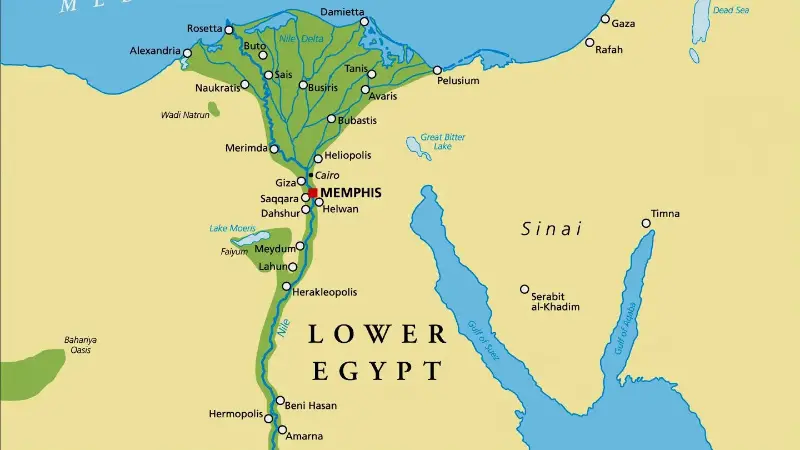 Read about: where is saqqara in egypt
History of Memphis Egypt
During the Middle Kingdom (1938–c. 1630 BC), Memphite influence persisted, and after Egypt was reunited, the official residence of the 12th Dynasty (1938–c. 1756) was located nearby at Itj-tawy (near modern Al-Lisht), close to the entrance to Al-Fayyūm. Most of the Middle Kingdom monuments were found closer to Al-Lisht, but a few 12th Dynasty monarchs constructed pyramids at Dahshūr, the southernmost of the Memphite pyramid fields. However, Memphite art and administration appear to have dominated throughout this time, and nearly every monarch of the 12th Dynasty made additions to the magnificent temple of Ptah.Who built the city of Memphis Egypt
Pharaoh Menes (also called Narmer) is credited for uniting Upper and Lower Egypt circa 3100 BC, and he created Memphis. Menes, who is regarded as the first monarch of a united Egypt, decided to establish Memphis as the new capital of his kingdom, which would be located close to the mouth of the Nile Delta. The city was a major hub in the early history of ancient Egypt because of its advantageous location, which allowed for improved control over trade, politics, and defense.Why Was Memphis Built?
Memphis was constructed to function as the newly united Egypt's political and administrative center. The decision was made to locate it in a protective and economical manner. Its location at the meeting point of Upper and Lower Egypt gave it more control over trade routes, which was essential to preserving the wealth and authority of the Egyptian state. Because of the city's location, the administration was also able to efficiently administer the Nile Valley's agricultural areas, which were vital to the local economy. Memphis was also close to other significant religious locations, such as Heliopolis, the center of sun worship, which subsequently developed into its own religious hub and was devoted to Ptah, the deity of creation and artistry. https://www.youtube.com/watch?v=sqBvoehCU58Memphis Egypt Facts:
- Memphis was known as Also Known As”Hut-ka-Ptah • White Walls • Manf • Manfish • Minf”
- After uniting Upper and Lower Egypt, King Menes constructed Memphis in 3100 BC.
- The Egyptian name "Menofre" is whence the Greek term "Memphis" originates.
- During the 27th Dynasty, when the Persians governed Egypt, Memphis was the capital.
- Memphis served as a center of administration for millennia.
- UNESCO World Heritage Site: Memphis was designated as a UNESCO World Heritage Site in 1979 because of its historical significance.
What is Memphis Egypt famous for?
From its establishment, Memphis has been associated with great status, and this association persisted during the Third Intermediate Period (1069–525 BC) with the collapse of the New Kingdom. Memphis' position did not change at this time, despite the neglect experienced by some other cities. Upon his invasion of Egypt in 671 BC, the Assyrian monarch Esarhaddon (681-669 BC) made it a point to pillage Memphis and exile the community's leaders to his capital city of Nineveh. Nonetheless, the city's sacred significance made sure it survived the Assyrian assault and was restored. After Memphis developed into a hub of resistance against Assyrian dominion, Ashurbanipal (668–627 BC), who invaded in 666 BC, destroyed it once more. Additionally, Ashurbanipal pillaged Thebes and other significant cities.What Is There To See In Memphis, Egypt?
1. Ptah temple.
In the 1850s, Auguste-Edouard Mariette conducted excavations that resulted in the discovery of the ancient Ptah temple.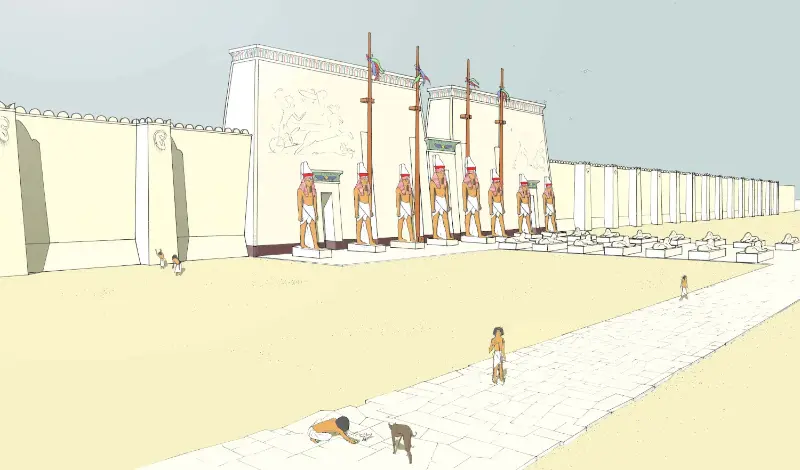
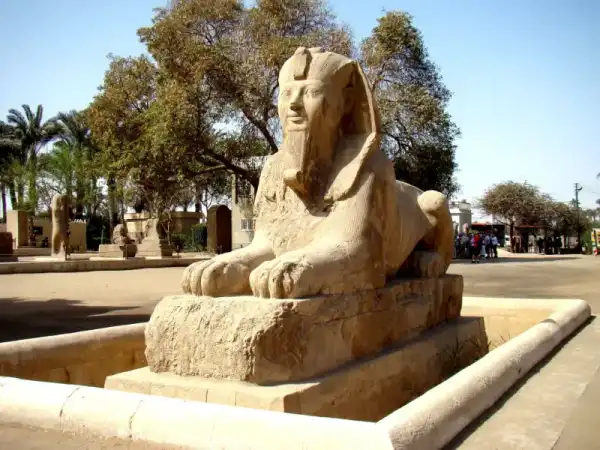
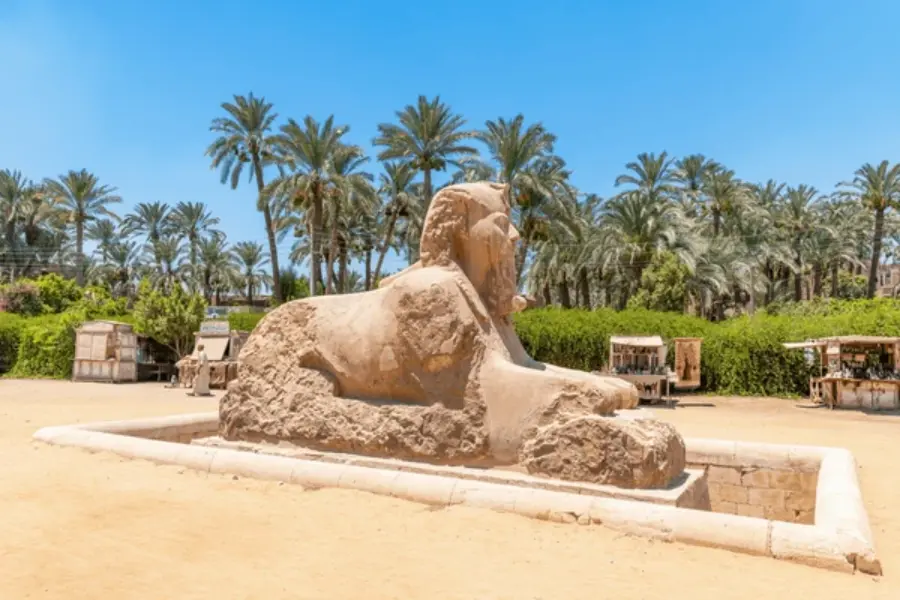
2.An enormous sphinx of alabaster.
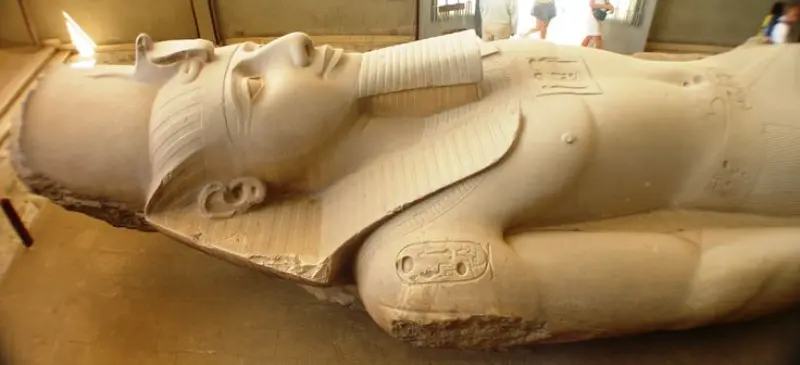
3.The Ramses II grand pylon.
4.The Temple of Ptah's magnificent hall supported by pillars.
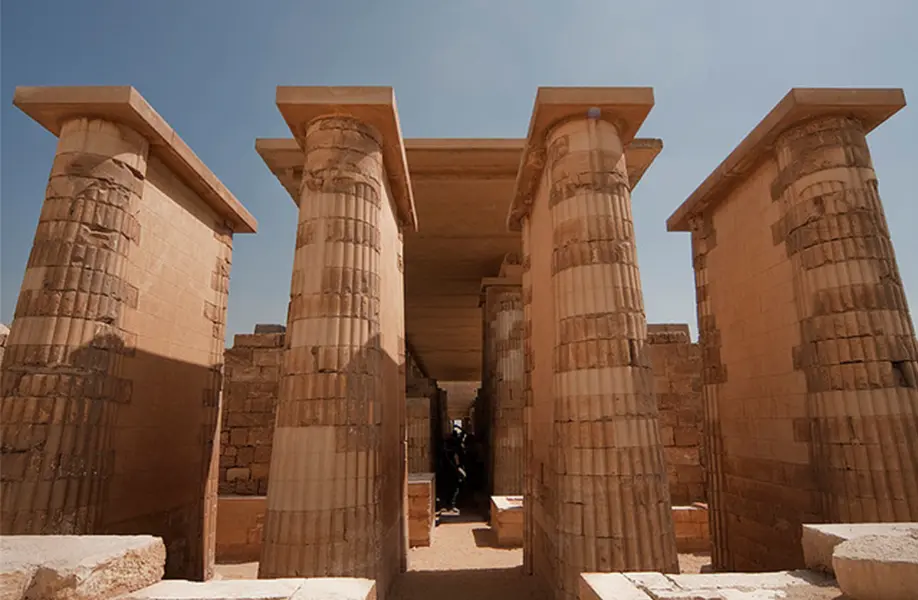
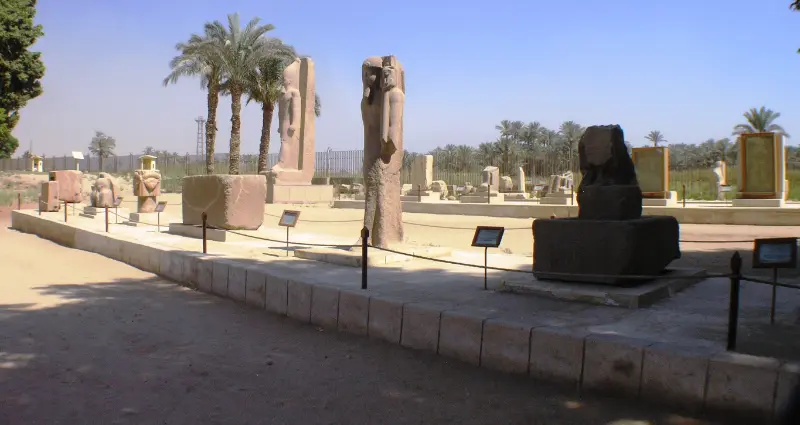
5.Open Air Museum.
7.The enormous sphinx made of alabaster with 80 tones!
Is Memphis Egypt worth to visit?
Indeed, Memphis, Egypt is well worth a visit, particularly for those with an interest in the history and archeology of ancient Egypt. Even though not much of the original city has survived, Memphis's Mit Rahina archaeological site provides an intriguing look into the city's past. Here are some reasons to visit:- Enter the era of antiquity
- View the enormous Ramses II statue
- Examine the Temple of Ptah's remnants.
- View the Sphinx in Alabaster
- Convenient to visit with Giza and Saqqara
- A calmer, more serene encounter