
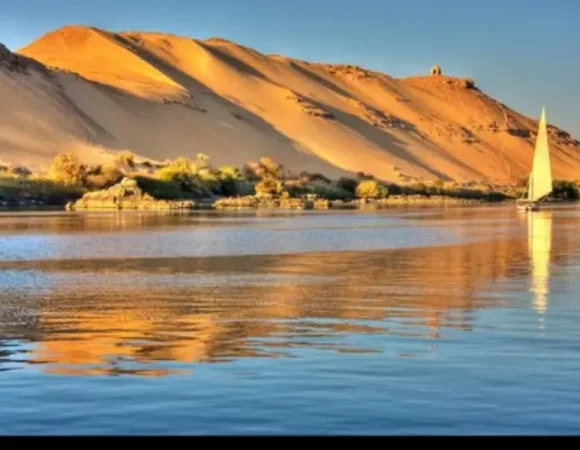
If you ask ten tourists which is the best place to visit in Egypt, you would probably have ten different answers. And that’s exactly what makes this destination unique, because here the must-sees are scattered along thousands of kilometers of desert and Nile, and there is no one particular place to see everything. The pyramids will offer you the picture for your postcard, Luxor will show you the ancient tombs and temples, the Red Sea will offer you the underwater coral reef. Here is the list of actual places and their real purpose.
Giza Pyramids and the Sphinx
Almost everyone starts here, and honestly, they should. The Pyramids of Khufu, Khafre, and Menkaure have been sitting on that plateau for over 4,500 years, with the Sphinx keeping watch the whole time. For most people, this is the moment — the one photo everyone back home is waiting to see.
Giza is basically on Cairo's doorstep, so there's zero reason to skip it even on a short layover-style trip. A camel ride around the plateau is the obvious add-on, but the Solar Boat Museum next door is worth the detour too — it holds a fully reassembled funerary boat that was buried right alongside Khufu's pyramid.
Why Giza Tops Every List
The last of the seven ancient wonders still standing
Sphinx and all three pyramids within walking distance of each other
Evening light shows give the site a completely different feel after dark
Desert stretches out for miles in every direction beyond the plateau
Best Time to Visit Giza
Get there right when it opens. The heat hasn't kicked in yet, the crowds haven't either, and the light is genuinely better for photos. If your dates are flexible, November through February keeps daytime temps manageable — there's not much shade out there once the sun's up.
Luxor – Egypt's Open-Air Museum
"Open-air museum" gets thrown around a lot, but with Luxor it actually fits. This is ancient Thebes, once the capital of Egypt, and there's more packed into this stretch of the Nile than anywhere else in the country. If ancient history is why you're going to Egypt in the first place, Luxor is where that pays off.
Valley of the Kings
Pharaohs such as Tutankhamen and Ramses II were buried within these rock-cut tombs. The tomb of Tutankhamen has gained all the publicity since its discovery in 1922 by Howard Carter; however, there are some other tombs close by that have far more intact wall paintings than this popular one.
Karnak and Luxor Temples
Karnak is the biggest religious complex ever built, full stop. Massive columns, an entire avenue lined with ram-headed sphinxes — it's a lot to take in. Luxor Temple, down closer to the river, has its own draw: it's lit up at night and looks completely different once the sun goes down. Seeing both back to back is really the best way to grasp how big this stuff actually was.
Aswan and Abu Simbel
Things slow down once you head south. Aswan sits along the Nile with a different energy — Nubian villages, botanical islands, desert views that feel a world away from Cairo's noise. It's also your jumping-off point for Abu Simbel, arguably the most jaw-dropping site in the country.
Philae Temple
This one's dedicated to Isis, and its backstory is almost as interesting as the temple itself — the whole thing was dismantled and rebuilt stone by stone in the 1960s to save it from the floodwaters after the Aswan High Dam went up. Getting there by boat across Lake Nasser makes the arrival feel like a bit of an event.
Abu Simbel Sun Festival
Every six months, the sun becomes perfectly aligned and illuminates the sanctum sanctorum of Ramses II's temple. This is an age-old engineering marvel that never fails to wow. If you want to catch that moment of precision in all its glory, you must visit the Abu Simbel Sun Festival Experience tour.
Cairo's Historic Districts
There's a whole other side of Cairo that has nothing to do with pyramids. Two neighborhoods in particular are worth carving out real time for.
Islamic Cairo Highlights
Medieval mosques, madrasas, and the sprawl of Khan el-Khalili — this part of the city rewards slow wandering. Don't skip:
Sultan Hassan Mosque and its towering minaret
Al-Azhar Mosque, one of the oldest in the Islamic world
Khan el-Khalili, the centuries-old market for spices, textiles, souvenirs
The Citadel of Saladin, for the best skyline view in the city
Coptic Cairo Landmarks
Coptic Cairo is where Egypt's earliest history of Christianity is located, such as the Hanging Church and the Ben Ezra Synagogue. Coptic Cairo is a very small place that feels like an entirely different country from the pharaonic sites.
The Grand Egyptian Museum
This is now the largest museum on earth built around a single civilization, and it's finally where Tutankhamun's entire treasure collection lives. It sits close enough to Giza that pairing both in one day is easy, and honestly, it's become the missing piece for understanding what you're looking at once you get to the tombs.
Why Visit Before Giza
Going through the collection first gives you context you just don't get standing in front of an empty tomb. The Grand Egyptian Museum Experience package is built around giving this new landmark the time it deserves.
Red Sea Coast for Diving and Relaxation
Not everything in Egypt is thousands of years old. Around Hurghada and Sharm El Sheikh, the Red Sea coast delivers some of the best diving anywhere, full stop — the reefs and visibility are hard to beat. A lot of travelers tack this on at the end of a trip just to decompress after days of temples and museums.
What Makes the Red Sea Different
Coral reefs thick with fish, and the occasional dolphin sighting
Warm water diving practically year-round
Everything from budget stays to five-star resorts
Snorkeling options if diving isn't your thing
What Is the Best Place in Egypt to Visit?
There isn't one right answer — it depends entirely on what you're after.
Best For Multi-Stop Travelers
If you want to see it all without doubling back, combining Cairo, Luxor, and Aswan into one trip is really the smartest way to do it. The 7 Days 6 Nights Cairo, Aswan, Luxor and Abu Simbel itinerary covers most of this ground in one well-paced route.
Conclusion
Those that benefit the most from the trip to Egypt tend to be those that do not attempt to choose only one place. Giza’s monuments, Luxor’s temples, Aswan’s riverside, Cairo’s old districts, the Red Sea’s coastlines – every one is doing its part, and all of them combined provide an overall impression rather than just a fragment of it.
Also read about : Egyptian ancient furniture
FAQs
What is the best place in Egypt to visit for first-timers?
Giza and Cairo make the easiest starting point, with Luxor and Aswan next for deeper history.
How many days do you need to see Egypt's main sites?
Around 7 to 10 days covers Cairo, Luxor, and Aswan comfortably.
Is the Red Sea worth visiting alongside historical sites?
Definitely — it's a good reset and the diving speaks for itself.
When is the best time of year to visit Egypt?
October through April, hands down, for the most bearable temperatures.
Can you visit the Grand Egyptian Museum and the Pyramids in one day?
Yes, they're close enough to easily combine in one day.
Is Abu Simbel worth the extra trip from Aswan?
Yes — especially around the sun festival, it's one of the most memorable things you'll see in the country.