
Let me tell you something about Egypt during Eid.
The city has started its daily activities despite the darkness that continues to fill the early morning hours at 5 am. The low hum of Allahu Akbar you hear before you see the source, which then moves to different locations until it seems to come from all directions.
The street outside your window shows a complete transformation because the area that had no people at midnight now has people walking in their finest attire towards the mosque. Old men in white galabiyas. Fathers hold their small children who remain fully awake and joyful at this time.
That moment — that specific 5 am moment — is where Eid in Egypt really begins. And nothing I write here will fully do it justice. But let me try.
What is Eid, Exactly?
The word 'Eid' simply translates to 'festival' in Arabic. But in Egypt, where the majority of the population comprises Muslims, who number around 90%, the meaning of the word transcends its mere definition. It is not only about being a religious festival but about that time when the whole country collectively chooses that there is nothing else that matters except for family, food, thankfulness, and celebration.
The Egyptian calendar comprises of two Eids, which differ not only in emotions but also in rituals. Nonetheless, what both of them bring to the country is a complete and utter stoppage of work, along with everybody coming back home.
Is Eid a Public Holiday?
Yes, It's a Public Holiday — and Cairo Gets Eerily Peaceful
Both Eids are official public holidays. Schools, banks, government offices, most businesses — all closed for several consecutive days, sometimes up to five. Occasionally longer.
And here's the thing about Cairo during Eid: it goes quiet. Not silent — Egyptians don't really do silent — but noticeably, almost shockingly calm. The city empties as millions of people leave to visit family in Alexandria, the Delta, Upper Egypt, wherever home is. The streets that normally require nerves of steel to cross become almost leisurely. Locals joke about it. Tourists are genuinely confused.
It's one of the strangest and most wonderful things about Eid in Cairo — a megacity that briefly, for a few days, remembers how to exhale.
To Understand Eid Here, You Have to Understand Egyptians
I'm serious about this. You can memorize every tradition and still miss the whole point if you don't understand the people first.
Egyptians are warm in a way that can honestly catch you off guard. They're generous almost to a fault — the kind of generous where refusing food feels like a minor personal insult. They are loudly, proudly, deeply attached to their families and their communities. And Eid is basically the holiday that was invented specifically for people like this.
The dates shift every year because Eid follows the Islamic lunar calendar — moving about eleven days earlier each time, rotating slowly through all four seasons. So some years Eid falls in the punishing July heat. Others in cool, quiet winter. It doesn't matter. The tables are still full either way.
What you'll notice if you're in Egypt during Eid is how completely naturally the sacred and the everyday blend together. Someone comes straight from the mosque in tears from the prayer, and twenty minutes later they're arguing with their cousin about football. Both things are completely genuine. That's just how it works here.
The Two Eids — Because They Really Are Different
Eid al-Fitr (عيد الفطر) is what Egyptians call El Eid el-Sagheer — the small Eid. But honestly, small is relative. This one comes at the end of Ramadan, after a full month of fasting from sunrise to sunset — no food, no water, nothing. When Eid al-Fitr finally arrives, the relief is almost physical. People don't just celebrate because tradition says to. They celebrate because they genuinely, deeply feel like celebrating. There's a giddiness to it, a lightness that's completely earned.
Eid al-Adha (عيد الأضحى) is El Eid el-Kebeer — the big Eid. This one honors Prophet Ibrahim, who was willing to sacrifice his own son out of devotion to God. It falls during the Hajj pilgrimage and carries a more serious weight, especially in the morning. The rituals are more solemn. But by afternoon, the food is out, the family is over, and it feels very much like the same country celebrating the same love for each other — just through a slightly different door.
Eid al-Fitr Up Close — What You'll Actually See
The morning prayers are when it all begins. Before dawn breaks, families dress themselves up — properly dressed up, in their best attire — and proceed towards the mosque. But the mosque isn’t able to accommodate everybody, so the prayer mats come outside into the streets. Then more mats come outside onto the streets. Soon the entire street becomes a massive outdoor prayer, with its reverberating sounds filling the air even as the sky remains dark blue. Witnessing this once would make a person remember it forever.
Kahk (كعك)
I need you to learn about the deep emotional connection Egyptians feel toward kahk. The cookies are small round sweets which have powdered sugar coating and contain shortbread dough, date filling, crushed nut filling, and soft Turkish delight filling. The products have a basic appearance and have an amazing taste. It create the scent which represents Eid.
Egyptian expatriates who have spent decades in foreign countries experience a return to their childhood when they detect the aroma of kahk baking. People will present you with kahk throughout your Eid al-Fitr celebrations. Please eat the food. You should consume all the food they give you and then request an additional item.
New clothes are non-negotiable.
Every child in Egypt wakes up on Eid morning knowing there's a new outfit waiting. Adults do it too, though they're slightly less excited about it outwardly. Markets are absolutely rammed for weeks beforehand. If you need to buy something practical during that period, just... wait.
Eidiyya (عيدية)
Eidiyya is the cash gift that older family members give to the younger ones. Kids collect these like currency throughout the holiday — from grandparents, aunts, uncles, parents' friends, anyone who counts as family, which in Egypt is a surprisingly large number of people. The children are keeping a running total. They know exactly how much they have. Do not underestimate them.
The family visits are the whole architecture of the holiday.
People travel for hours — from Cairo to Alexandria, from the Delta down to Aswan — just to sit in a room together. The visits are long and loud and they never end when anyone says they will. Someone always stays later than planned. Someone always ends up sleeping over. Nobody minds.
The parks, the corniche, the streets
Once the family portion of the day settles, everyone goes outside. Amusement parks, the Nile waterfront, public gardens, the zoo — all of them overflowing with families, kids running ahead of their parents, vendors selling everything imaginable. It is noisy and happy and completely alive.
Eid al-Adha Up Close — What Makes This One Different
The sacrifice requires preparatory work when visitors want to observe the ceremony. The streets of Egyptian cities display live sheep and cows, and sometimes camels, during the days leading up to Eid al-Adha. The animals stand tethered to various locations which include apartment building spaces, sidewalk areas and vacant lots.
The unexpected nature of this situation creates a complete stop of your movement. Families who have the financial means to do so conduct animal slaughtering on Eid morning as a religious practice that follows Ibrahim's story. The ritualization process involves solemn behavior which holds significant importance for the participating families.
Fatta (فتة) is the dish of Eid al-Adha, period. It is layers – flat bread torn and placed at the bottom, rice, and finally fall-apart meat that has been slowly cooked. It is all covered in a sauce, which is a mixture of tomatoes and vinegar. It is rich and warm and just what one would want for this occasion. Each and every Egyptian household has its own way of preparing fatta, and they will fight for their method with their entire chests. When fatta is offered to you, the only thing that should follow is you accepting the second portion.
Open doors, literally — after the morning rituals, Egyptian homes during Eid al-Adha are simply open. No formal invitations. No planned guest lists. People arrive, people are fed, people stay. If you somehow find yourself near an Egyptian family during Eid al-Adha and they find out you haven't eaten yet, your day has just been rerouted. Accept it graciously. You will not regret it.
The giving — something shifts in the country during Eid al-Adha. Donations go up noticeably. People are kinder in small ways — on the road, in the market, with strangers. It's not performance. It's just what the day asks of people, and most of them genuinely show up for it.
Should You Visit Egypt During Eid?
Absolutely. Just be sure of what you’re getting into.
Popular places fill up quickly, I mean quickly, since many Egyptians travel during the holidays, so accommodation costs rise fast along with a scarcity of accommodation. Book ahead of time, even more ahead of time than you would have thought was necessary.
This is what you gain for yourselves in return: a bare Egypt. Not an Egypt on show for tourists, but actual Egypt as it is. All of its decoration, the aroma from all of its dishes, the noise from the streets, the unexpected hospitality of someone suddenly realizing that you're a guest with whom they can celebrate Eid. And yes, sometimes invitations to eat fatta with a family, sometimes finding yourself in a park surrounded by three generations of one happy family who decided to include you in their holiday plans. It happens much more often than expected. Accept this fact.
Also read about: how long do you leave henna on
Where to Actually Go During Eid
Cairo
The capital during Eid is overwhelming in the best possible way. Al-Azhar Park becomes a full festival ground. Islamic Cairo is lit up with lanterns. Khan el-Khalili is shoulder-to-shoulder with people who are all somehow in a good mood. And the Pyramids at Giza with Eid fireworks going off behind them — honestly, just go. Some things need to be seen.
Alexandria
Cooler, breezier, more relaxed. The Corniche fills up with families walking slowly and eating as they go. The fish restaurants are operating at what feels like controlled chaos. Montaza Palace Gardens are beautiful if you need somewhere quieter to sit and watch the holiday from a gentle distance.
Luxor
There's something particular about celebrating Eid in Luxor. You're sitting inside one of the oldest cities on earth, surrounded by temples that were already ancient when Islam was born, and the call to prayer floats over all of it like it belongs there — because it does. The local Eid celebrations feel unhurried and genuine. It's one of the places where you feel the full weight of how long Egypt has been Egypt.
Hurghada and Sharm el-Sheikh
Beach Eid. Lots of Egyptian families choose this: sun, water, long lunches on a terrace, a version of the holiday that leans vacation. The resorts are packed but the mood is easy and warm. A perfectly valid way to spend it.
Aswan
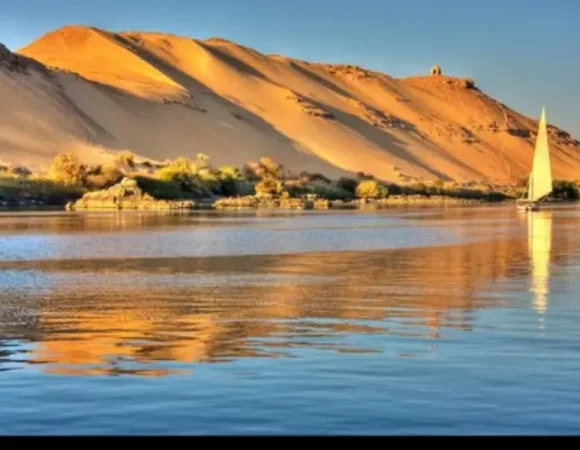
My personal favorite, if I'm being honest. The Nile is gentler here, the light is golden in a way that's almost unreasonable, and the Nubian villages celebrate Eid with music and color that feels ancient and alive at the same time. Get on a felucca at sunset. Sit there. Don't look at your phone. You can figure out the rest of your life later.
Siwa Oasis
Far, genuinely far, but worth every hour of the journey if you make it during Eid. The celebrations here draw on Berber traditions that haven't really changed in centuries. It's quiet and deep and completely unlike anything else in the country.
Also read about: what do people wear in Egypt
The Part That Doesn't Fit in a Guide
Here's what I actually want you to take away from all of this.
Eid in Egypt isn't something you experience from the outside. It pulls you in — through the smell of kahk in a hallway, through a greeting from someone you've never met, through a table that has more food than is physically reasonable and a host who will not hear that you've had enough.
You'll be mid-bite in a stranger's home, surrounded by people having three conversations at once in a language you might not speak, and you'll realize you have absolutely no idea how you ended up here and you don't want to leave.
That's Eid in Egypt. That's what it actually is. Not the bullet points. Not the traditions listed in order. The specific, irreplaceable feeling of being welcomed into something real by people who mean it.
There's nowhere quite like this. Not during Eid. Not anywhere.
FAQs
What actually happens during Eid in Egypt?
The day begins with communal prayer before sunrise which brings thousands of people to fill both mosques and streets. The day unfolds through family gatherings which include large meals and cash gifts that parents give to their children while they spend their time at parks and along the Nile River. The event lasts multiple days while its excitement continues to maintain high levels throughout the entire period.
What is the complete purpose of Eid celebration?
The two Eids both focus on expressing gratitude while spending time with others. The observance of Eid al-Fitr serves as the ultimate release which happens after Ramadan because the month of fasting ends with full-blown celebration. The observance of Eid al-Adha requires people to show their dedication through sacrifices which should be shared with all their neighbors not just their family.
What location in Egypt has the most stunning natural beauty?
Anyone who asks an Egyptian should prepare themselves for an intense discussion about the issue. Most people choose to visit Aswan. The Nile River bends through the area while Nubian buildings show their unique colors and the sunlight creates a particular golden hue which produces a peaceful atmosphere that remains with the viewer. The Eid celebration reaches its perfect state when village music begins to play and boats navigate through the waterways.