What Is Abu Simbel In Egypt
Ancient Egyptians placed a high value on religion and temples played a significant role in their daily lives. Temples were dedicated to specific gods or goddesses and were exclusively open to temple priests and the pharaoh for devotion. Abu Simbel is a temple complex built into a solid rock cliff in southern Egypt, situated at the second cataract of the Nile River. The site's two temples, The Great Temple and The Small Temple, were built during Ramesses II's reign (c. 1279 - c. 1213 BCE) between 1264 and 1244 BCE or 1244-1224 BCE. The difference in dates is due to conflicting understandings.
Who Built Abu Simbel
The Abu Simbel, The site of two temples erected by Ramses II in the 13th century BC. The area is located on the southern frontier of Pharaonic Egypt, near the current border between Egypt and Sudan. The temples remained unknown to the outside world until their rediscovery in 1813.Abu Simbel History
The Great Temple was likely built to commemorate Ramesses' victory over the Hittites in the Battle of Kadesh in 1274 BCE, as evidenced by the rich art work inside. Some academics suggest that the initial construction took place about 1264 BCE, while the victory was still fresh in people's minds. The grand monument's location on the border with Nubia suggests it was built after Ramesses II's Nubian campaigns with his sons, possibly in 1244 BCE. It was likely built as a symbol.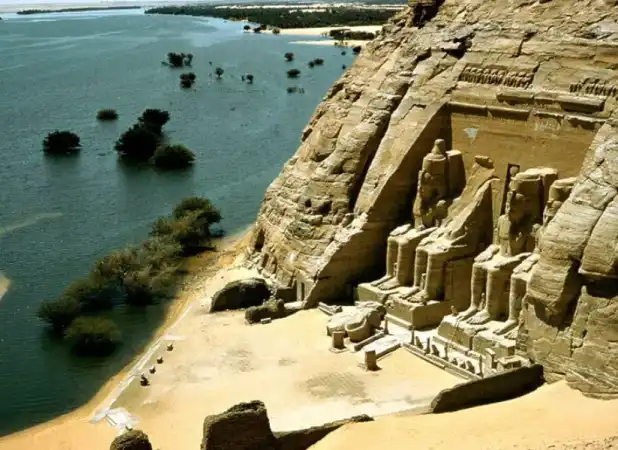
Abu Simbel Before Relocation
Abu Simbel was awe-inspiring, appearing to spring naturally from the cliffs surrounding it prior to its relocation. As visitors approached from the river, they were welcomed by the Great Temple's majestic exterior, which was dominated by four huge sculptures of Ramses II, each measuring over 60 feet tall. These statues, with their peaceful looks and authoritative poses, were unmistakable representations of the pharaoh's divine authority. The statues of Nefertari and Ramses in the smaller temple were similarly impressive, albeit significantly less in stature. The Great Temple of Abu Simbel in Egypt was a spectacular structure with an astrological alignment that lit the statues of Ramses and other gods twice a year. The temples were rediscovered in 1813 by Swiss explorer Johann Ludwig Burckhardt and have since become an emblem of Egypt's cultural history. However, the Aswan High Dam threatened the site, prompting a major archaeological salvage project spearheaded by UNESCO.
How Old Is Abu Simbel
Abu Simbel was built during the reign of Pharaoh Ramses II and finished in 1244 BCE. This means that the temples will be 3,280 years old in 2024.When Was Abu Simbel Built
were created during the rule of Ramesses II (c. 1279 - c. 1213 BCE) either between 1264 - 1244 BCE or 1244-1224 BCE. The discrepancy in the dates is due to differing understandings of the life of Ramesses II by modern day scholars.Where is Abu Simbel located?
Abu Simbel, the location of two temples built by Egyptian king Ramses II (reigned 1279-13 bce), is presently located in Aswān Muḥāfaẓah (governorate), southern Egypt. In ancient times, the area was located on the southern edge of pharaonic Egypt, facing Nubia.Abu Simbel In Egypt Facts
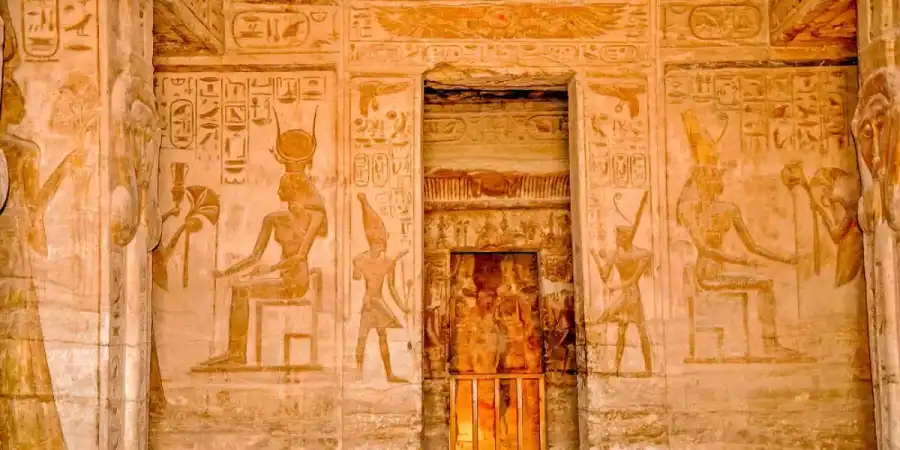
Here is an Interesting Facts Abu Simbel Temple To Know, from the past till nowadays. 1-Construction Ramses II, the most celebrated ancient Egyptian ruler, built the Abu Simble Temple. Construction began in Aswan. The temple was primarily carved into a solid granite face. The major purpose of building was to commemorate Ramses II's victory over the Hittites during the Kadish battle in 1274 B.C. 2- The purpose of Abu Simbel. The temple was dedicated to a number of ancient Egyptian gods, including Ra-Horakhty, Ptah, and Amon. 3- What is found at Abu Simbel complexes The Abu Simble complex consists of two principal temples: The Grand Temple, which stands 30 meters high and 35 meters long, features four seated colossi at the entry of King Ramses II's throne. It also has a number of pathways and rooms. The walls were covered in scripts detailing Ramses II's military successes, personal lives, and depictions of Ancient Egyptian gods. The Small Temple was built for Egyptian Queen Nefertari, Ramses II's favorite wife. The Small Temple, located 150 meters away from the Grand Temple, contains four enormous seated colossi on its façade, two of Ramses II and two of Nefertari. 4- Discovery of Abu Simbel Giovanni Battista Belzoni, an early Egyptologist, was the first to investigate the temples in 1817, and Swiss scholar Johann Ludwig Burckhardt went on to explore them further. 5- Abu Simbel Astrological and Archaeological Mystery The Solar alignment over the Grand Temple is an Ancient Egypt phenomena.The sun's rays penetrate the temple, lighting the three statues of Ramses II and Amon twice a year: once in February 22 to celebrate agricultural and cultivation season, and again in October 22 to celebrate floods season. Both dates indicate Ramses II's birth and coronation. The four sculptures were placed so that they would darken, as Ptah was the deity of darkness. 6-Abu Simbel And Nefertari A temple at Abu Simbel was built by King Ramses II in honor and affection of his wife, Queen Nefertari. 7- The Fear In The Minds The temple dates back to 2400 BC and was created with these massive figures to instill fear in the minds of its foes. 8- A memory in the mind This temple commemorates the Battle of Kadesh, one of King Ramses II's most significant battles during his reign. 9- Abu Semple in middle age Ahmed Othman, a sculptor, proposed transporting the temple by cutting it into blocks and stone fragments after it was sunk during the construction of the High Dam. 10-The biggest dome It has the world's largest concrete dome, with a diameter of 65 meters and a height of 23 meters, which is used to protect the temple statues. 11- Earthquake rack It was created with exceptional architectural accuracy to withstand the most severe earthquakes. If the temple was hit by a 10-Rich earthquake, it would be unaffected. 12 - The Sun And Abu Simbel The sun travels 200 meters perpendicular to the Holy of Holies hall, a phenomenon that occurs just twice every 365 days. 13- The temple complex includes two temples the Great Temple of Ramses II and the lesser Temple of Hathor. The Abu Simbel temple complex comprises of two temples constructed from a sandstone cliff on the Nile's west bank. The grander temple, known as the Great Temple of Ramses II, is devoted to the gods Amun, Ra-Horakhty, and Ptah, in addition to Ramses II himself. The temple houses four huge statues of Ramses II. 14- European explorers rediscovered the temples in the nineteenth century. European explorers, led by Swiss traveler Johann Ludwig Burckhardt, unearthed the temples of Abu Simbel in the early nineteenth century. Burckhardt was investigating the region for the African Association, a British organization dedicated to the exploration and mapping of Africa. Burckhardt understood the importance of the Abu Simbel temples and wrote extensively about them in his travel journals. 15- Today, the temples are open to visitors and are among Egypt's most famous tourist destinations. Today, the temples of Abu Simbel are available to the public and are one of Egypt's most prominent tourist destinations, receiving hundreds of thousands of visitors annually. The temples' stunning architecture, exquisite sculptures, and historical significance make them must-sees for everyone interested in ancient Egyptian culture and history. Visitors can explore the temples' various rooms and corridors, admire the magnificent statues and carvings, and learn about their history and significance. The site also includes a visitor center and museum that provide further information about the temples and their restoration.What is the Abu Simbel Sun Festival?
The Abu Simbel Sun Festival is a one-of-a-kind celebration done twice a year in Egypt's Abu Simbel temples to commemorate a solar occurrence. The event takes place on October 22 and February 22, honoring the alignment of sunlight that lights the temple's inner sanctuary, with the exception of the statue of Ptah, the deity of the underworld. The temples were meticulously planned to coincide with the dates of Pharaoh Ramses II's life. To avert submersion by Lake Nasser in the 1960s, UNESCO relocated the temples to a higher elevation. The event attracts visitors from all over the world, with folklore shows, traditional dances, and numerous celebrations.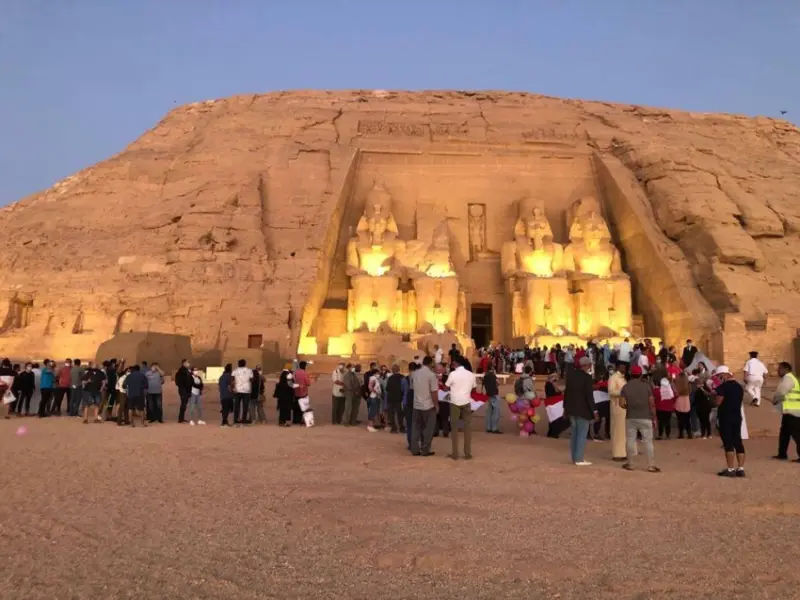 Read about: where is aswan dam located
Why Is Abu Simbel Temple In Egypt Important
The Great Temple, dedicated to Ramses II, Ra-Horakhty, Amun, and Ptah, was fashioned out of a mountain on Lake Nasser's western shore. Because Amun was a major god during Ramses' reign, the temple was dubbed "the temple of Ramses-Meryamun," which translates as "Ramses, beloved by Amun." One of the abu simbel interesting facts is that the Rameses II is shown in four 20-meter (66-foot) seated figures in front of the temple, two on each side of the entryway. Smaller sculptures of his mother Muttuy, queen Nefertari, and children surround their feet. Above the four statues is a row of 22 squatting baboons. The massive sculptures functioned as sentries, watching for troops advancing from the south and warning foes of the pharaoh's power.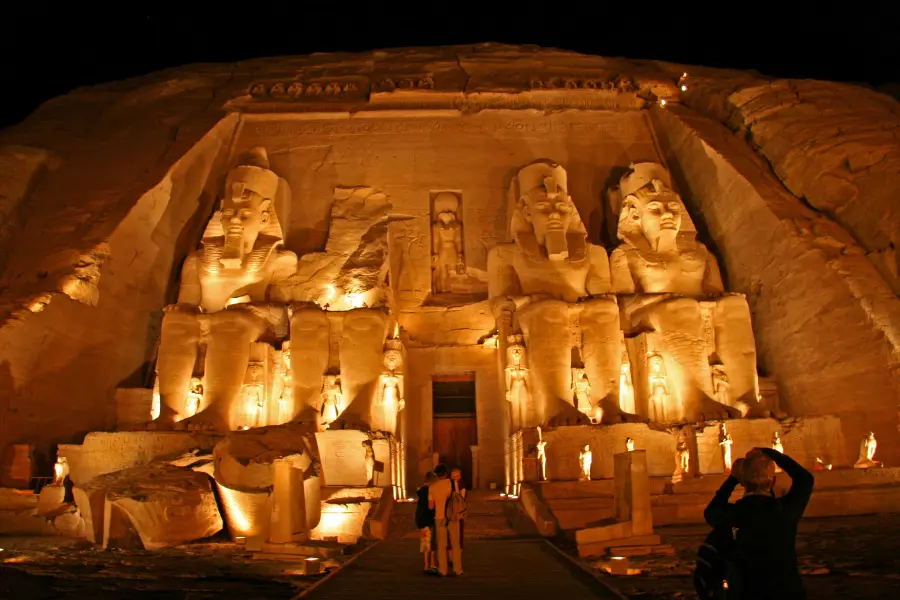
What Is Inside The Abu Simbel Temple?
Visitors will see a series of chambers decorated with intricate carvings and art. 1- The Temple of Ramses II The Temple of Ramesses II is the larger of the two temples at Abu Simbel. It is dedicated to the gods Amun, Ra-Horakhty, and Ptah, as well as Ramesses himself. The temple is famous for its four colossal statues of Ramesses II, each over 20 metres tall. The statues are carved into the rock face of the temple, and their faces are said to represent the pharaoh at different stages of his life. Inside the temple, visitors can explore a series of chambers filled with intricate carvings and artwork.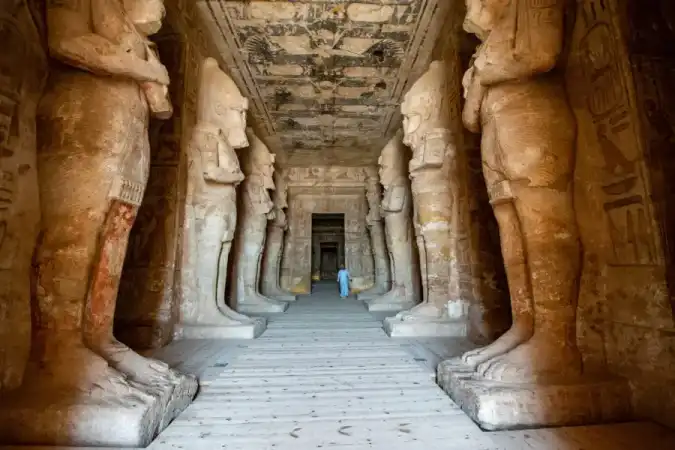 2- the temple of Nefertari
The Temple of Nefertari is a small temple located next to the Temple of Ramses II. It is a temple engraved with great works of art, and was dedicated to Ramses II's wife Nefertari and the goddess Hathor.
2- the temple of Nefertari
The Temple of Nefertari is a small temple located next to the Temple of Ramses II. It is a temple engraved with great works of art, and was dedicated to Ramses II's wife Nefertari and the goddess Hathor.
 It is a great statue that expresses Egyptian civilization, so much so that it appeared in many films and television programs.Abu Simbel is most memorably represented in the film The Spy Who Loved Me, where the temples serve as the villain's secret refuge. When you look at it, you will feel that it is familiar, as it appeared in many documentaries.
Abu Simbel Opening Hours
The greatest time to go is from 6am to 9am, but if you can't make it in the morning, the second best time is from 3 pm. Abu Simbel is open from 5:00 a.m. to 6:00 p.m. Remember to pack a hat, drink, and sunscreen, which are all vital necessities. Read about: places to see in luxor egyptWhat Does The Temple Of Abu Simbel Consist Of
The temple complex consists of two huge sculptures of Ramses II, each measuring over 65 feet tall and guarding the main temple entrance. These statues are surrounded by smaller representations of his family, including his wife Nefertari and their children.Tips For Visiting Abu Simbel
To truly appreciate the magnificence of Abu Simbel you can visit it with our Cairo, Aswan, Luxor and Abu Simbel Tour, here are some practical tips:- What To Bring: Water, sunscreen, and suitable walking shoes are all essential. Respect the site by dressed modestly and following photography guidelines.
- Cultural etiquette: Be polite of locals and mindful of cultural standards. Purchasing souvenirs and local handicrafts benefits the community while also bringing a piece of your journey back home.